
About Me
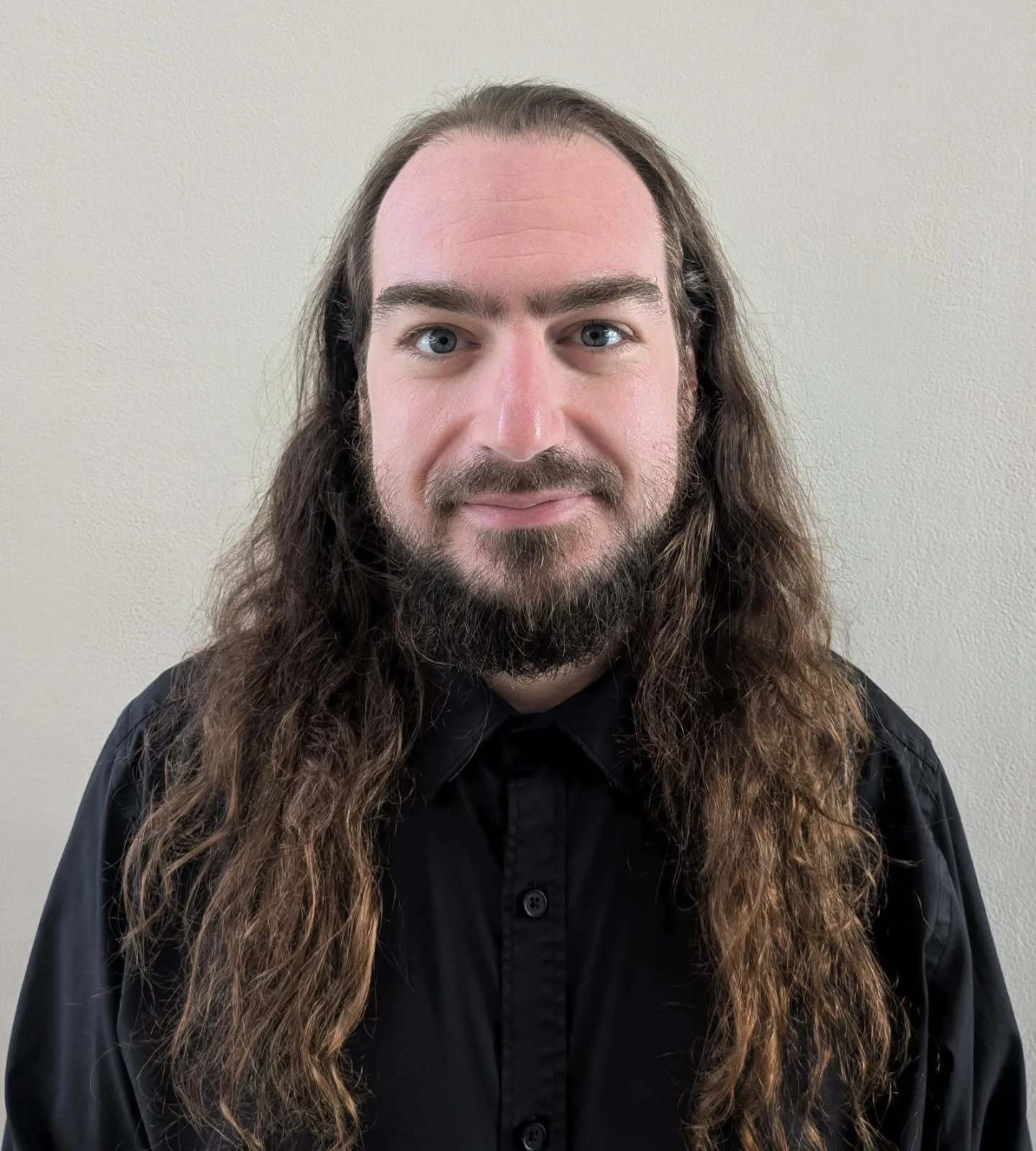
Hello, my name is David Nicolas Reisine, I am 38. I received my Bachelor’s degree in Fine Arts from University of California at Santa Cruz, where I fell in love with making sculptures. This led me to become a welder, a blacksmith, and a bronze caster, which in turn inspired me to pursue my Master’s degree in Fine Arts from SUNY Albany. I had always wanted to become some form of teacher so I could pass on my passion for art, however during this graduate program, I was introduced to working at a museum. This unexpected opportunity sparked something in me that I had never considered, and after many twists and turns, landed me a job as a museum preparator at SFO Airport’s Museum. There I learned a great deal about how to handle artwork and install all types of historical objects, and what it takes to present a successful exhibition. From there I decided I wanted to learn more about how museums operate and how other roles in a museum contributed to the overall functions of the museum. This is what led me to start working at the San Jose Museum of Art, where I am currently one of the lead experience representatives, which allows me to interact with guests on a more personal level. While working at SJMA, I was encouraged by my coworkers and friends to pursue a Master’s degree in Museum Studies, so that I might be able to expand my knowledge even further. Now, I am a graduate student at San Francisco State University in the Museum Studies program, where I am delving deeper into the inner workings of museums, specifically collections management and stewardship, which has become my passion. In this program I was encouraged by my professors to see how the information I learned in class is applied in the real world. I have been so excited to work here at NUMU, where I have been given the chance to actually practice what I have learned, as well as develop new approaches that I had never thought of before.
My Time at NUMU
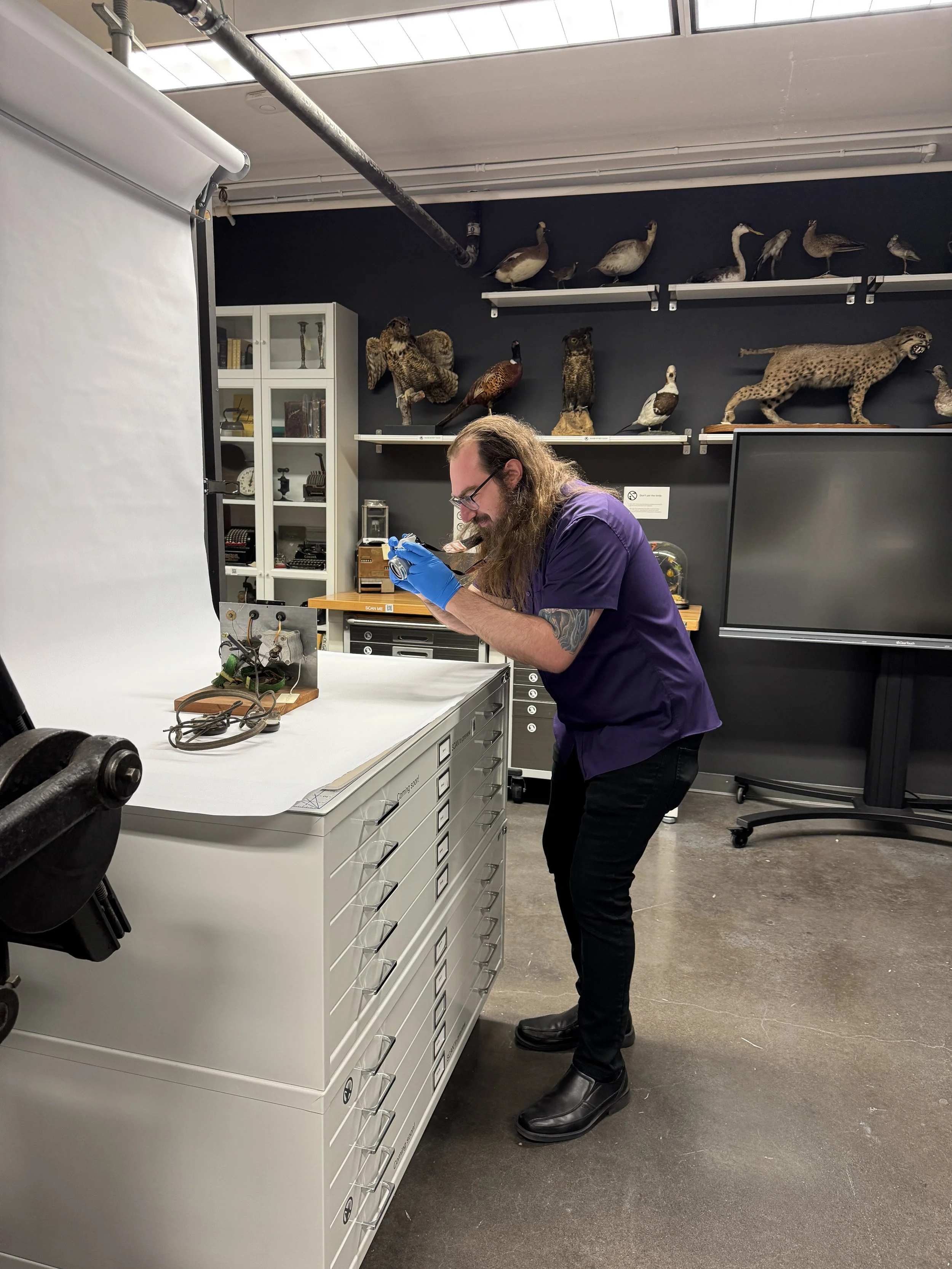
During my internship at NUMU, I was primarily tasked with finishing the cataloging of the 3D objects in the collection, as well as to organize the space and make way for new donations. I began with cataloging hand carved wooden birds as a way to learn the specific data management system used by NUMU. Though this might seem boring or monotonous to most people, I loved it! This was my first real experience with cataloging objects, and this type of work really resonated with me. Once I felt confident in implementing the correct way of cataloging, I went on to more challenging and obscure objects. The most interesting aspects of this process were the times when I had to dive deeply into the history of the objects, from learning about the cultural significance of abalone shells to the Ohlone people, to tracking down manufacturers of the parts used in the construction of a handmade crystal radio, and even learning about Victorian era sewing and stitch work to better explain the artistry of a quilt. I have learned so much from working with Alexandra and Allison that I feel excited to start classes again and implement my real-world knowledge.
Takeaways

The most important aspect of collection management I have learned at NUMU is adaptability. What I realized while learning how to catalog many different types of objects is that what one learns in classes or from textbooks only gives you part of the picture, often showing the best practices in a vacuum. Oftentimes, we come across objects with no information or barely any records, requiring research and deep dives to establish some context that we can use for identification. Another aspect of cataloging that really taught me about this adaptability is how varied are the types of objects that one may have to work on, often things you might never have considered would be in a museum’s collection. A prime example of this was when I was cataloging Ohlone abalone shells and rock fragments, where my ignorance of the indigenous culture made the process a new challenge. I had to ask myself, how do I condition and catalog a seemingly random big rock, or a shell of a sea creature? But that is what is so great about this hands-on experience! I was able to examine in detail the significance of the cultural context, as well as the importance of always being objective and respecting all forms of objects. These abalone shells are no less important than a painting or sculpture from a fine art museum, they just require a different approach to gathering and recording the data. I went from shells of sea creatures to Victorian quilts, to hundred-year-old town maps, to vintage typewriters, all requiring unique or specific handling and examination, but also all ending up in the same system of data management.
There are many other things I learned while working with Alexandra and the team at NUMU, but overall, this internship showed me how much I love and enjoy this aspect of collections management and fanned the flames of my passion for working in museums! I am very grateful for being given this chance to experience and learn in the real world what I hope to turn into a new career.
-written by David Reisine
