
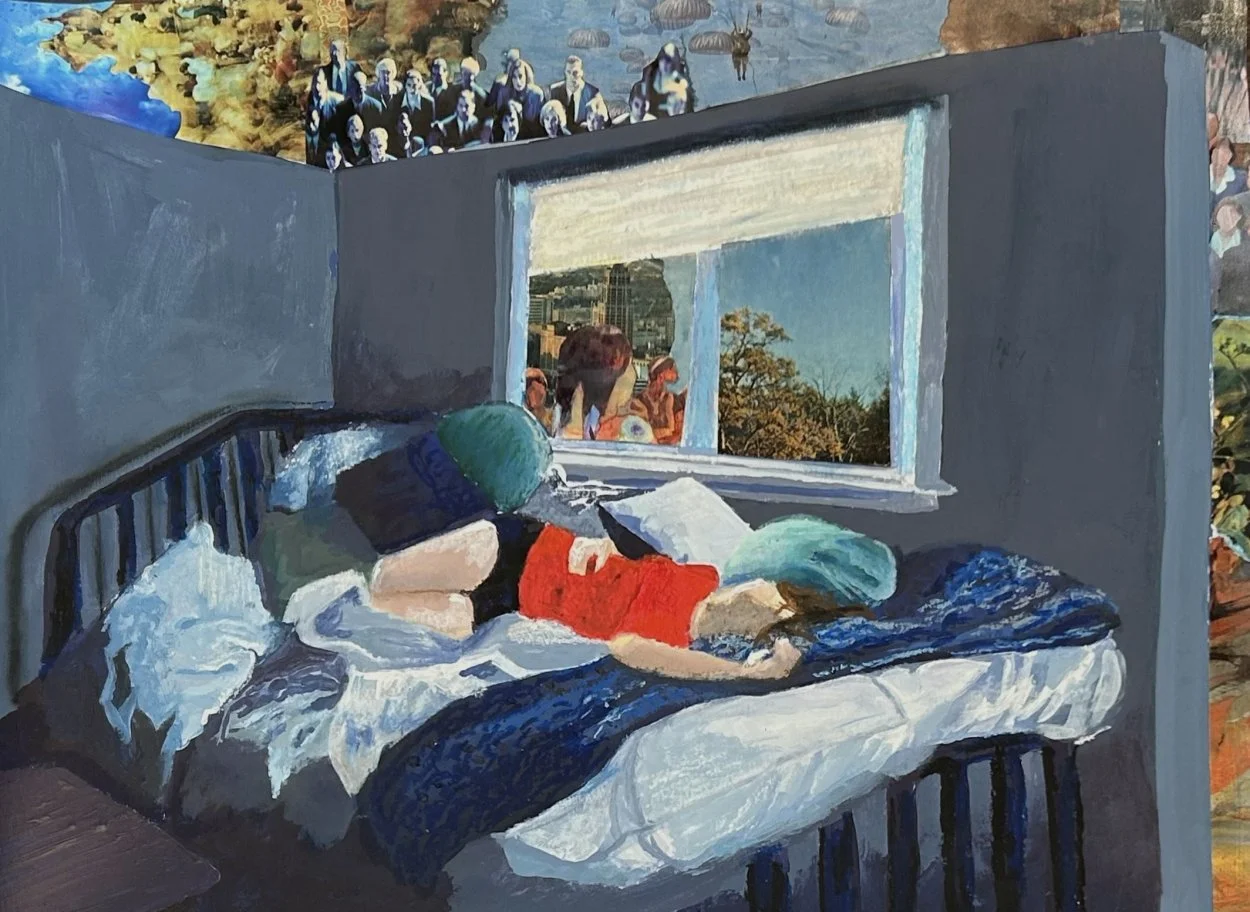
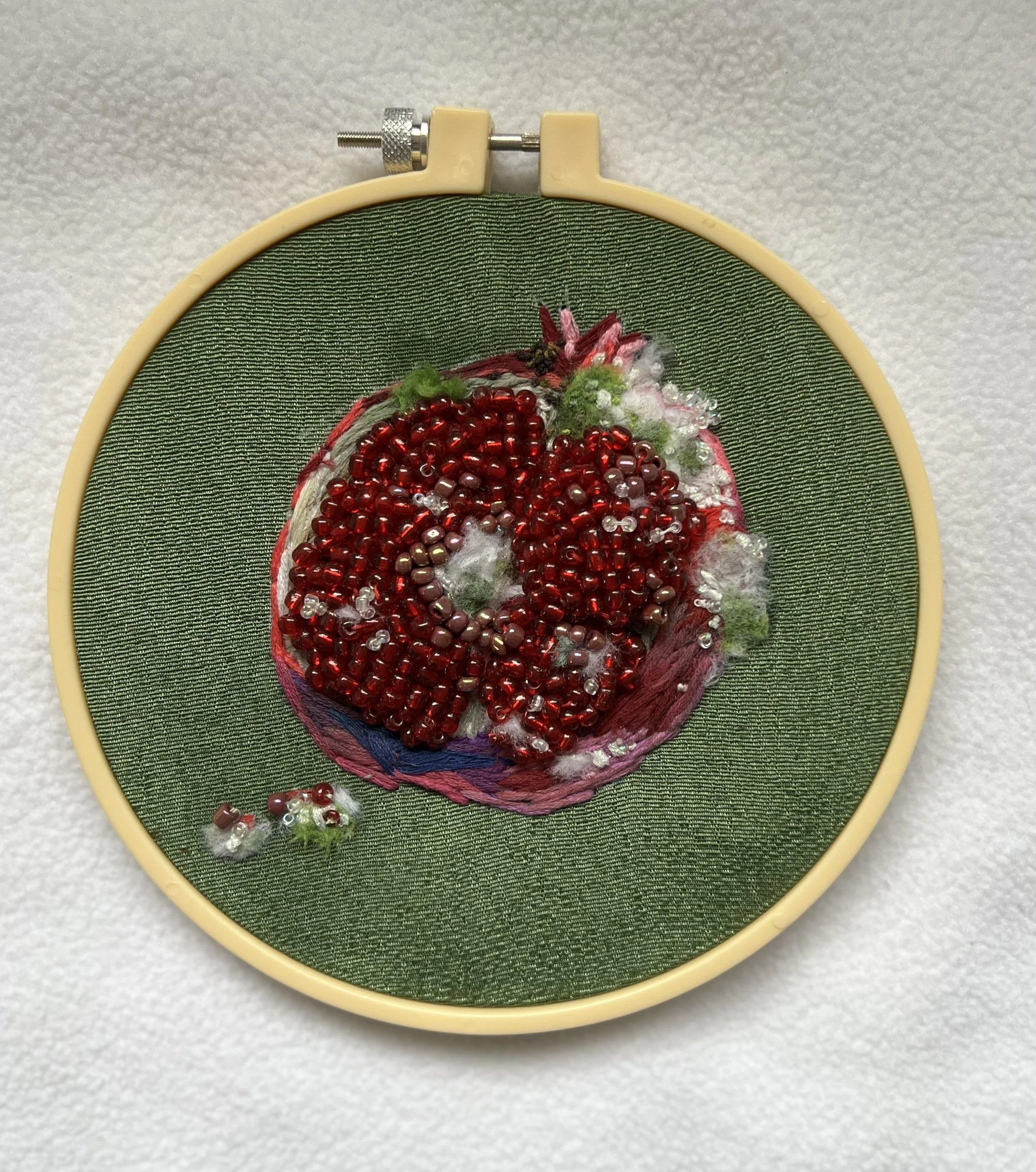
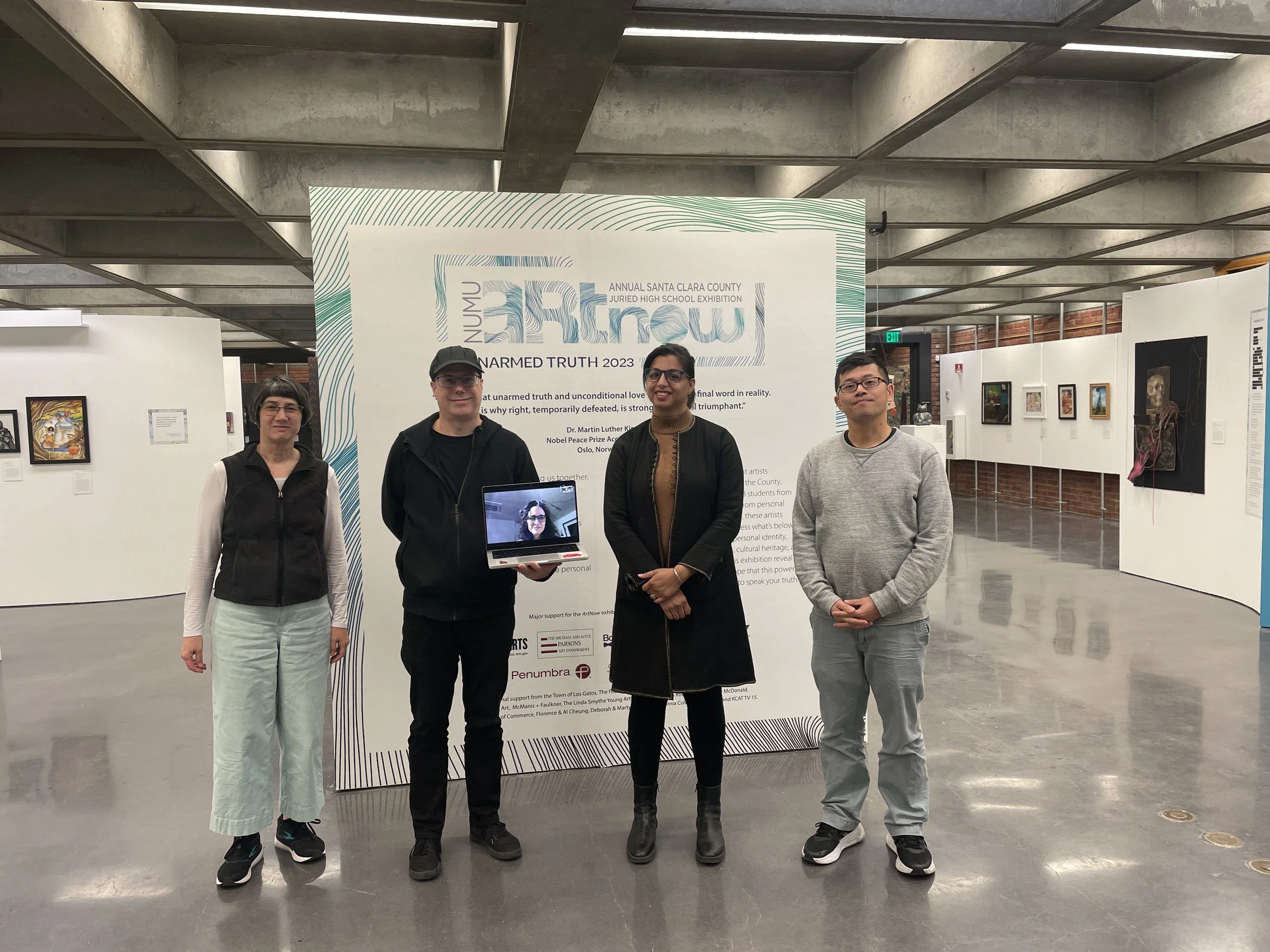
This year, we received 600+ individual submissions, more high-quality pieces than our gallery can hold, making selecting the final pieces for the exhibition a difficult process. Our selection committee saw high merit in each of these honorable mentions and wanted to show appreciation for the thoughtfulness and skill of each artwork. Although these students aren’t exhibiting artists in this year’s exhibition, we wanted to feature their artwork and statements on our blog to honor their effort, talent, and perspective.
Featured Artists
Genesis Alvarez | Sonya Anderson | Emilia Chen | Gleem Choi | AnaRose Flenniken | Emma Ha | Rain Han | Ellie Kang | Ivy Lee | Yishan Lin | Naomi Ohye | Paolo Pena | Seir Szewczyk | Aya Takano | Diana Ventura | Trisha Wadhwa | Charlie Wang | Emma Wang | Sophie Wang | Everett Wu | Yiling Wu | Hannah Ying | Peifeng Zhang | Isabel Zheng | Kiara Zhou
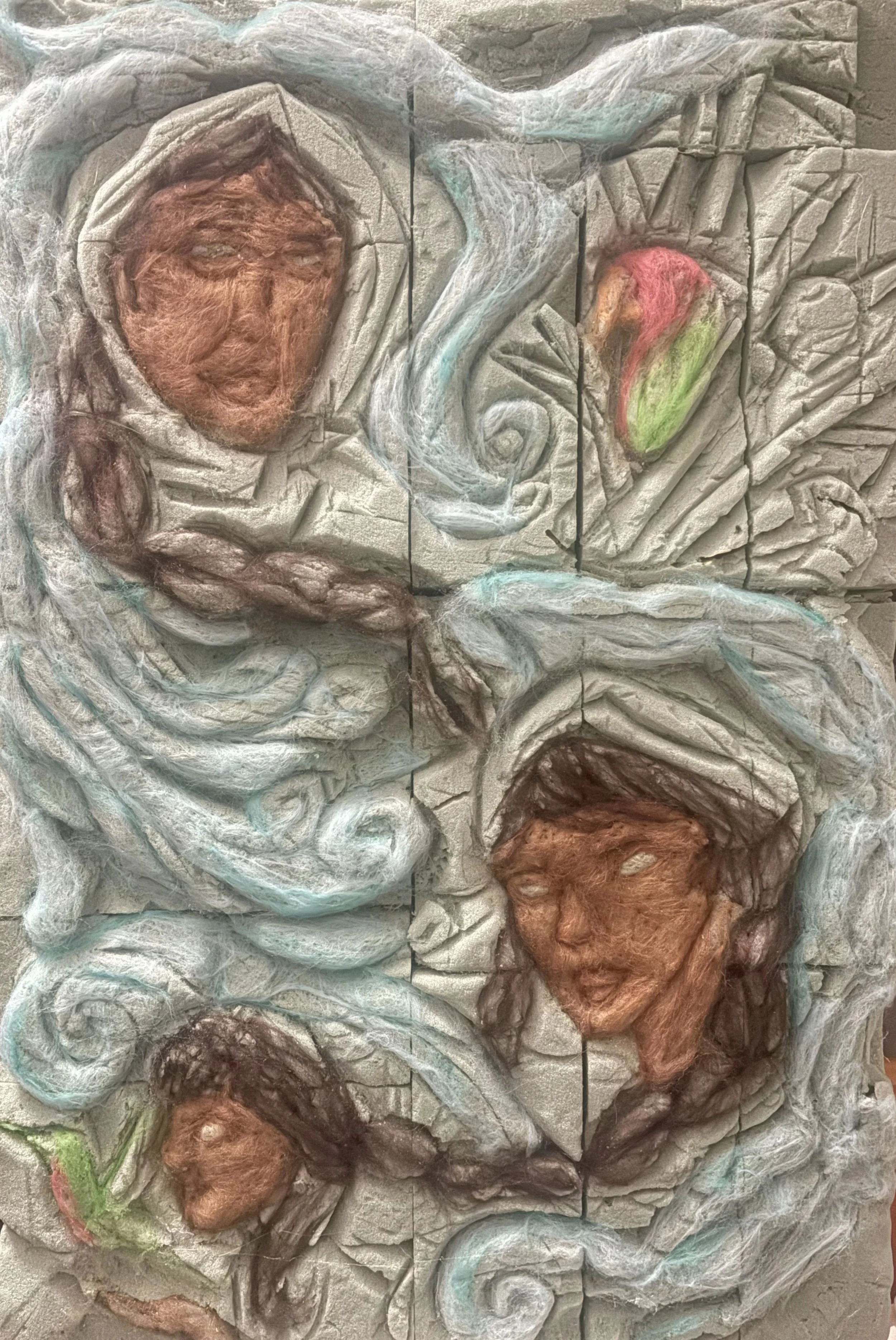
Genesis Alvarez, Perennial Family, Needle felting wool on dry oral foam, Independence High School, Grade 9, Instructor: Virginia Igelfinger
The definition of Perennial is "Lasting or existing for a long or apparently infinite time; enduring or continually recurring". To me that is family, like a perennial river that continuously flows , family is a strong bond that even surpasses relation by blood. It is like the nurturing of birds , they can be of different species and but in the end they drink of the same river that keeps them thriving. Family is a bond as woven as braids , each braid having individual strands of our life , which contain course and lush memories of love and pain.
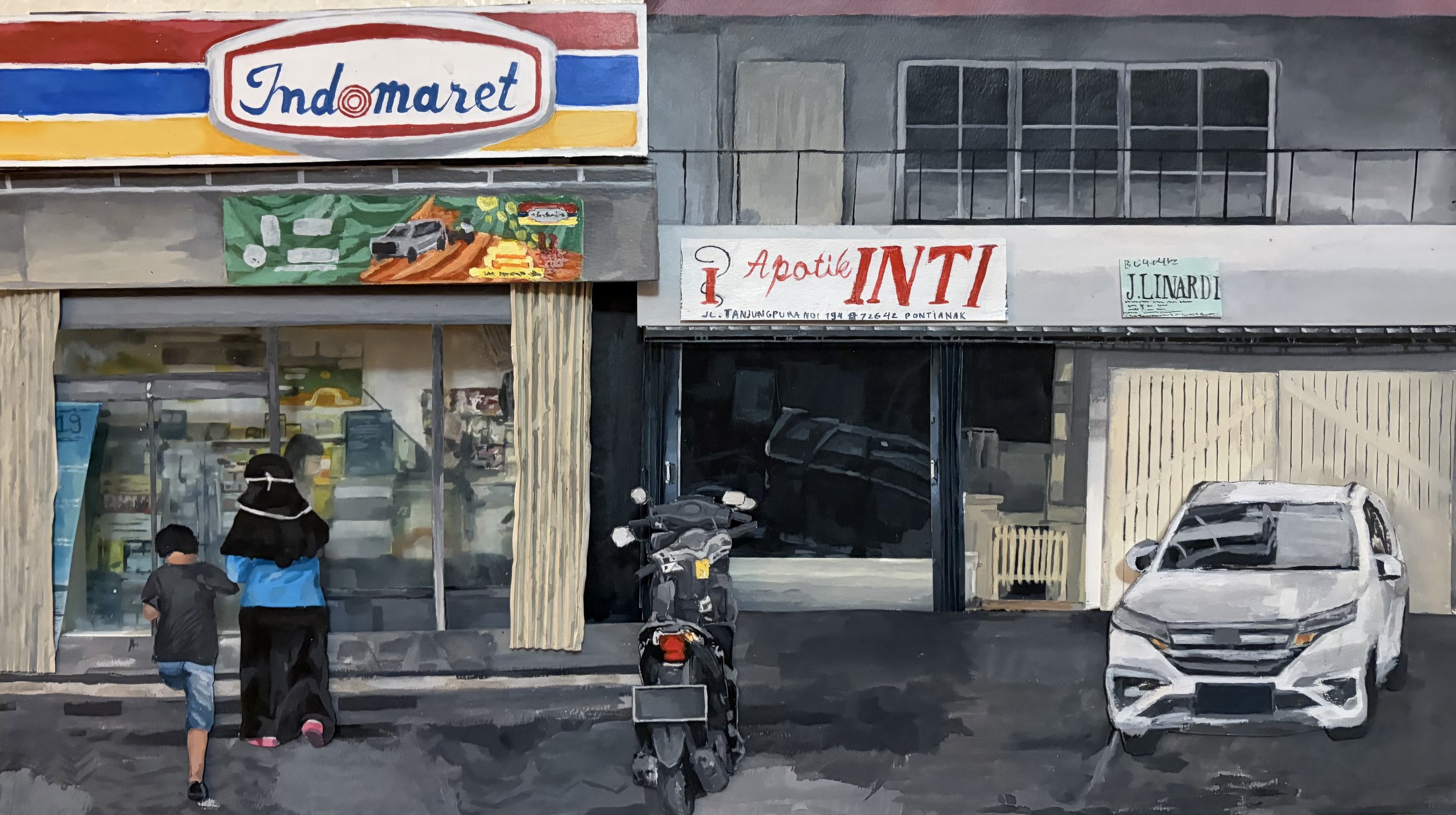
Sonya Anderson, Between the Clinic and the Corner Shop, Acrylic on mixed media, Mountain View High School, Grade 10, Instructor: Lori Nock
This piece depicts the space between my grandfather’s clinic and a corner shop in Pontianak, Indonesia. I painted each element on separate hand-cut acrylic layers and assembled them to create physical depth and overlap. The layered construction reflects the in-between nature of the street, where personal family history meets everyday public life. Though ordinary and familiar, this daily space holds memory, routine, and connection. By preserving it, I honor my family roots and the everyday environments that quietly shape who we become.
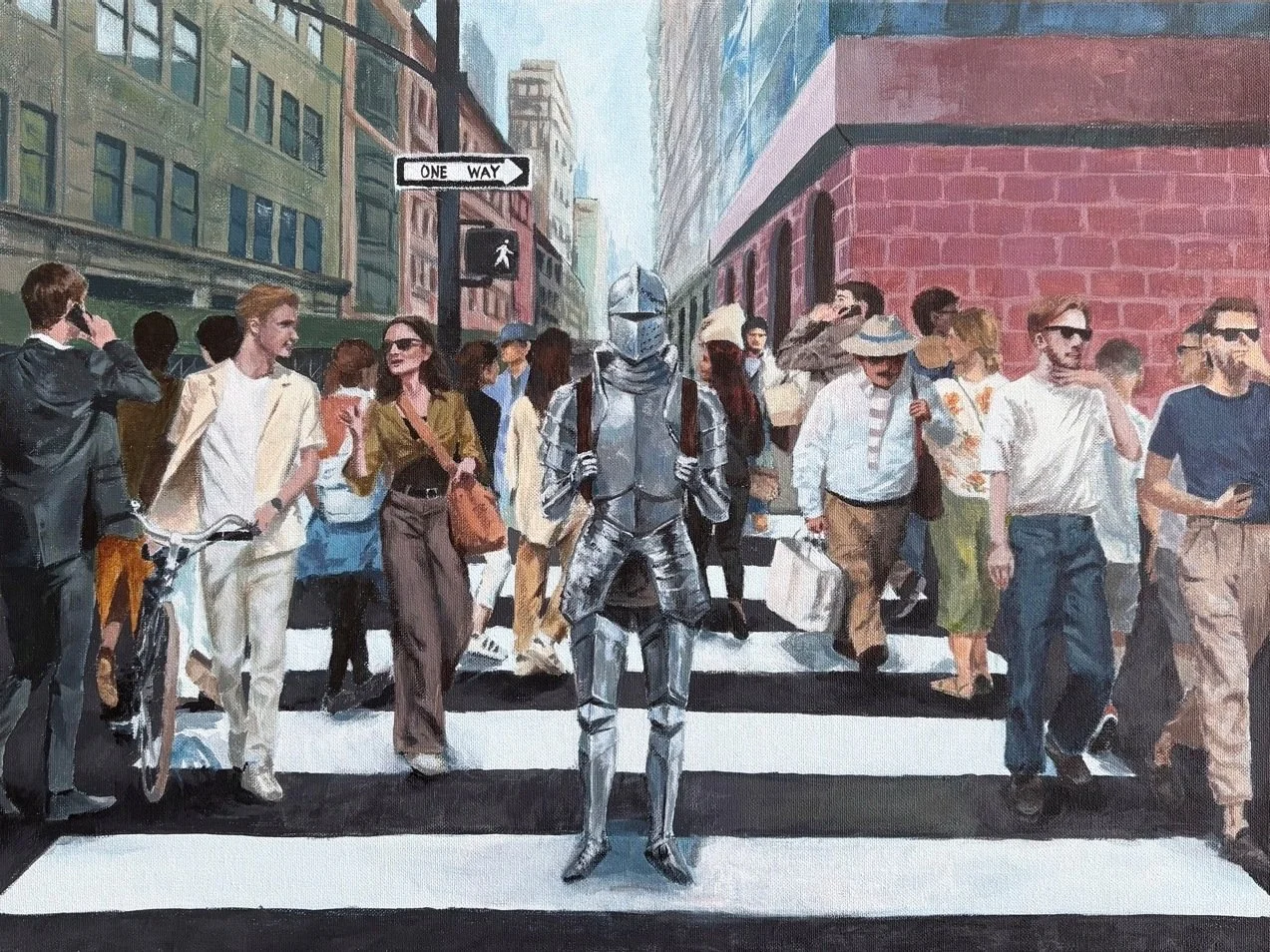
Emilia Chen, Armored, Acrylic paint on canvas, Los Altos High School, Grade 11, Instructor: Christine An
Ever since I was a kid, I’ve always had a hard time understanding how to act–how to be natural, how to be effortless. It was a mystery to me how others could be so free with their emotions. I’ve always wanted to be more like them, to be someone more radiant, but sometimes it feels like I’ve always existed with a stiff suit of armor that just won’t come off.
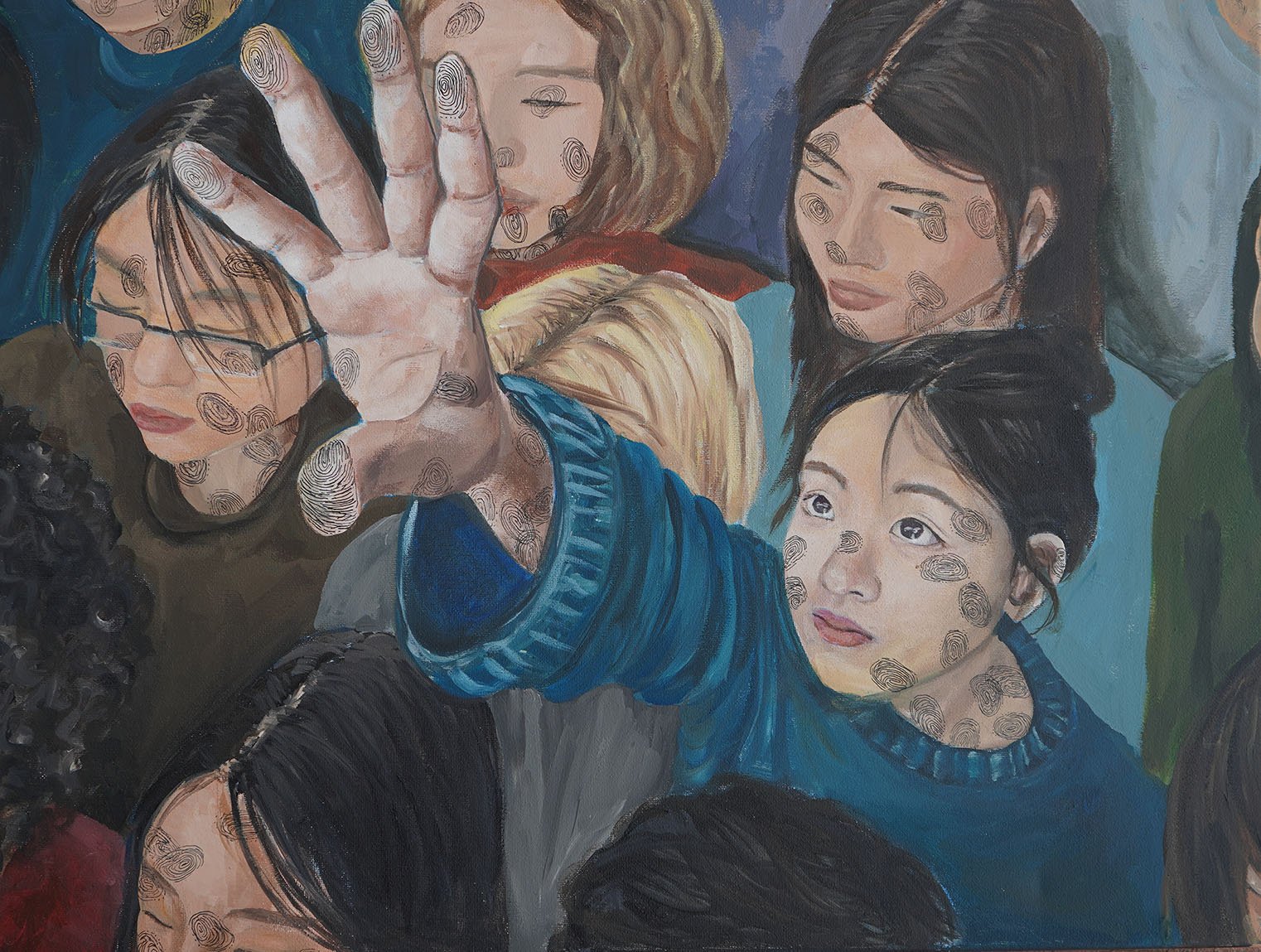
Gleem Choi, Mark, Acrylic on Canvas, Leigh High School, Grade 12, Instructor: Kimberly Bartel
This self-portrait explores how identity is formed in the space between self and others. My figure is covered in fingerprints of people who have shaped my life—marks that represent inherited values, influences, and experiences that create my personal pattern. Around me, figures look forward in unison, each person covered in their own unique combination of fingerprints. While I carry the imprints of others, my raised hand reaches beyond them, seeking to leave my own mark. This piece reflects the tension between who we are shaped to be and who we are becoming—existing between what came before and what lies beyond.
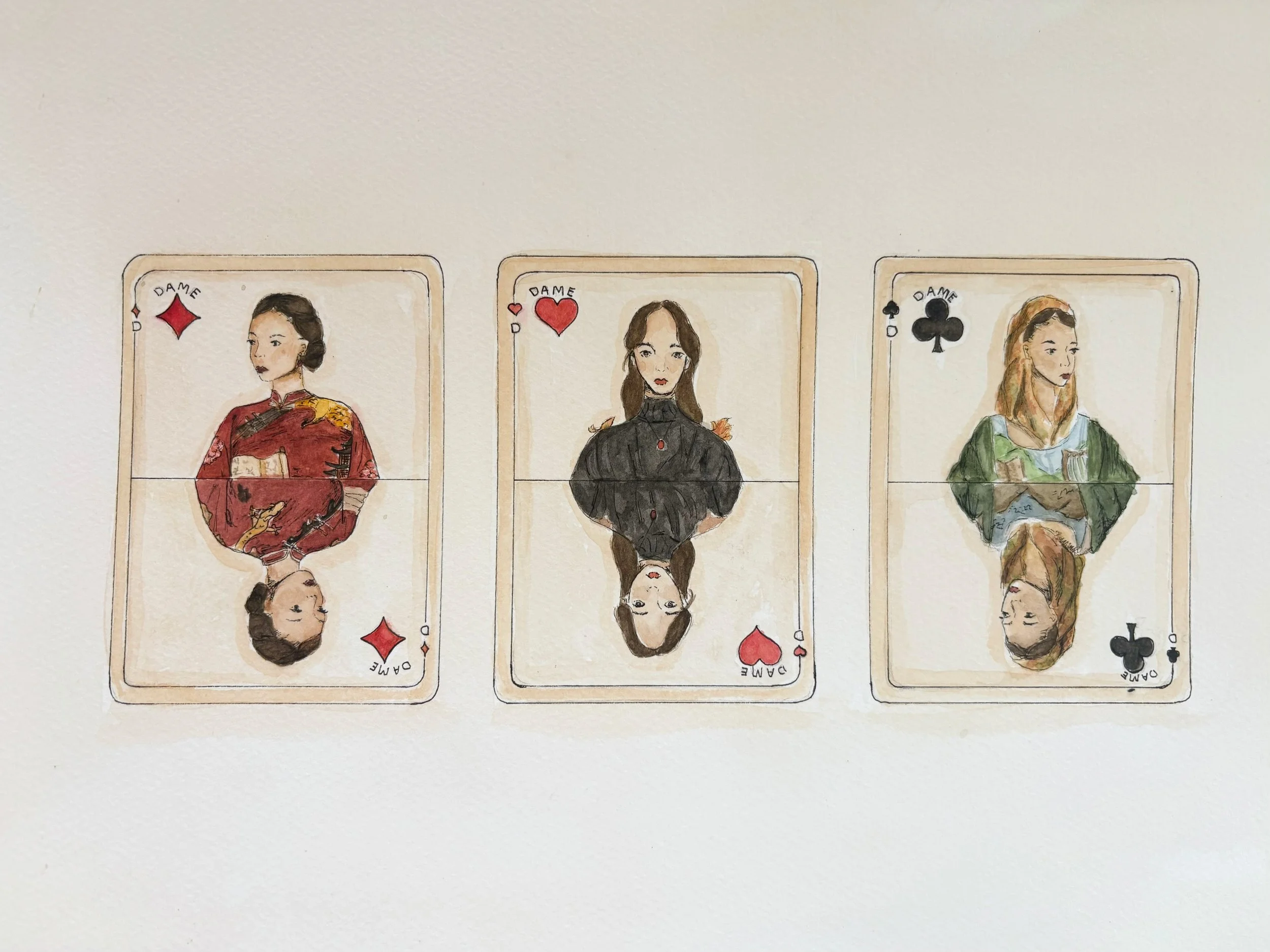
AnaRose Flenniken, House Rules, Ink and Watercolor on watercolor paper, Valley Christian High School, Grade 11, Instructor: Jill Carlson
My life echoes the paths before me—my mother’s northeastern Chinese roots and my father’s northern Irish past. Both carried art, stories, and triumphs, yet had shadows of fear, silence, and suffering. I am both the victim and the aggressor. Their histories pulse within me, inherited cards in a gamble of chance and choice. The past shapes, teaches, and warns, but doesn’t confine. In a world so different, yet still the same, I hold the brush to my own story. Poised between legacy and possibility, tracing the outlines of who I will become, not merely who I was born from.
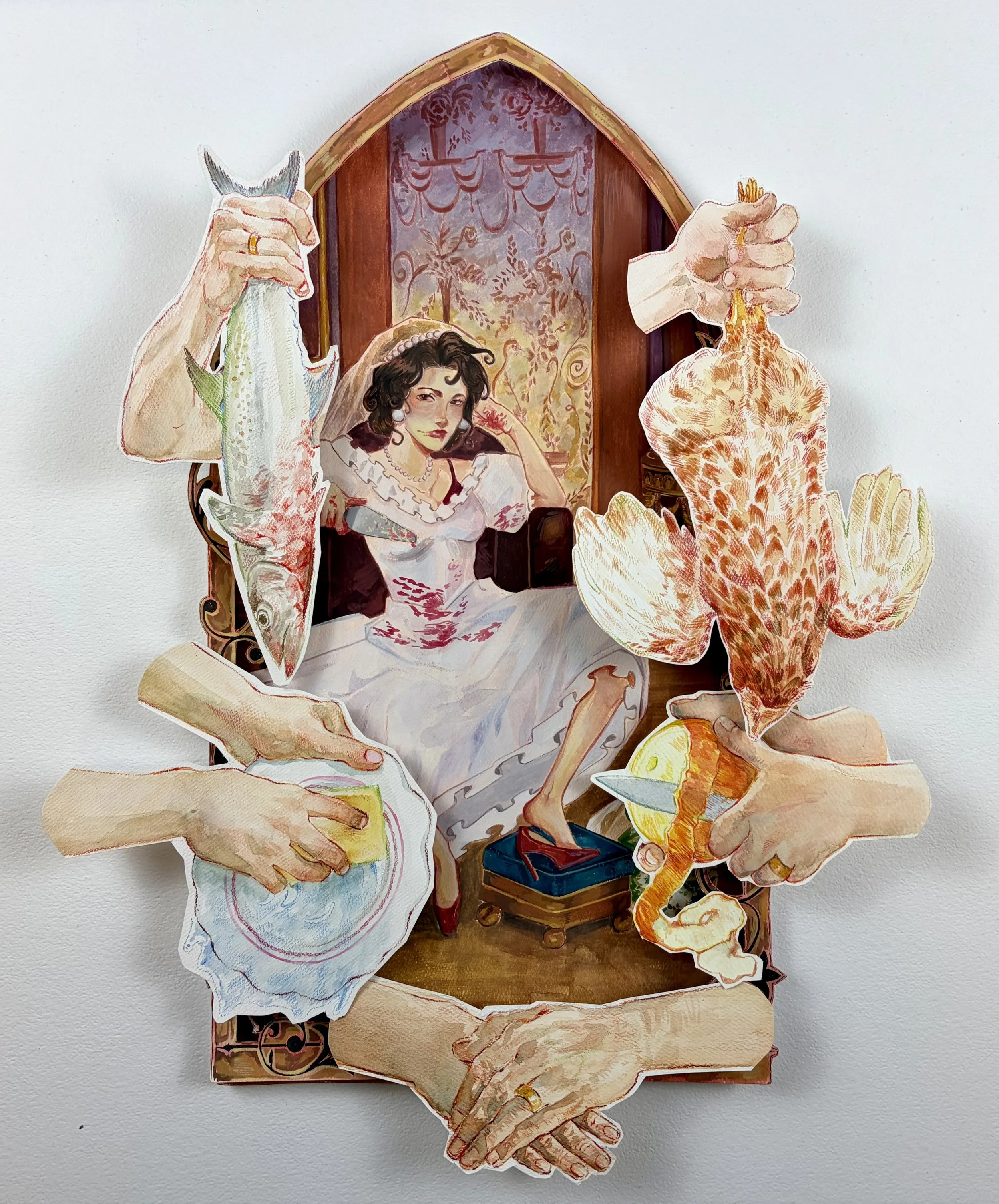
Emma Ha, Ex-Fiancee, Watercolor, gouache, color pencil on watercolor paper, constructed with foam board, Lynbrook High School, Grade 11, Instructor: Matthew Reynolds
“Ex-Fiancee” exposes the grooming instilled in women to prepare them for domesticity. The centerpiece references “The Reluctant Bride,” a painting of an angry bride waiting for her ceremony. Idealized and softly painted images of feminine duties contrast bolder gouache. The layers of anonymous hands show the preparation girls learn before their wedding day, considered the best day of their life, transforming them from girlhood. The centerpiece’s saturation, depicting a broken off engagement between obstacles and her future, proves her life freeing beyond the promises of marriage. It questions complacency’s value when your own life first is within reach.
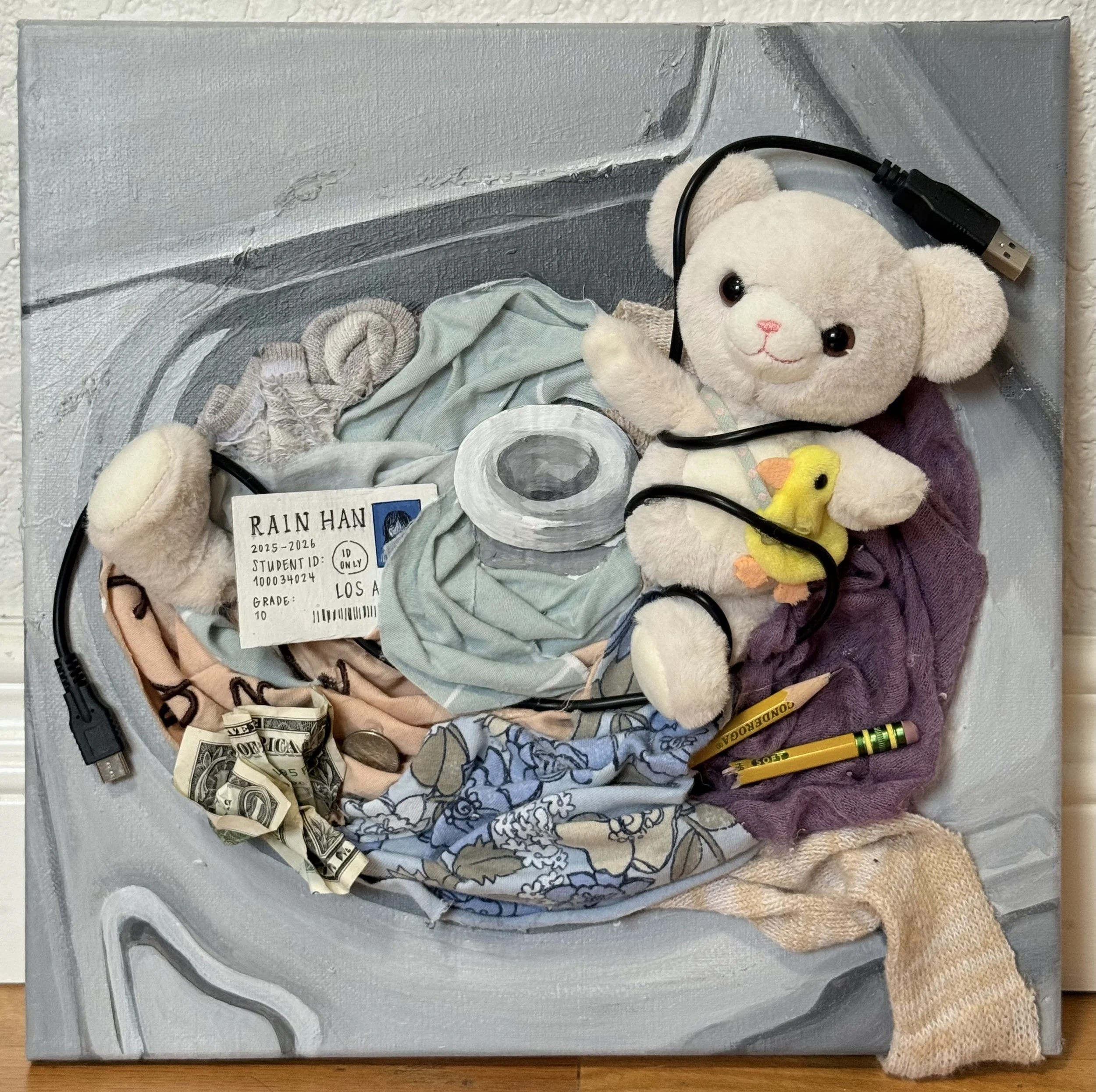
Rain Han, Rinse. Repeat., Stuffed animal, cloth, wool, sock, play money, coin, charging wire, pencil, cardboard, and acrylic paint on canvas, Los Altos High School, Grade 10, Instructor: Chao Ding
Rinse. Repeat. The machine hums, spins, pauses—then starts again. Each cycle feels productive, like something is being cleaned, improved, fixed. But the stains never really disappear. Stress, expectations, and routines pile up, folding into one another until life becomes mechanical. I move through the motions because that’s what I’m supposed to do, mistaking repetition for progress. Standing between who I’ve been and who I could become, I begin to wonder if staying in the cycle is easier than breaking it—and whether stopping the spin is the only way to change.
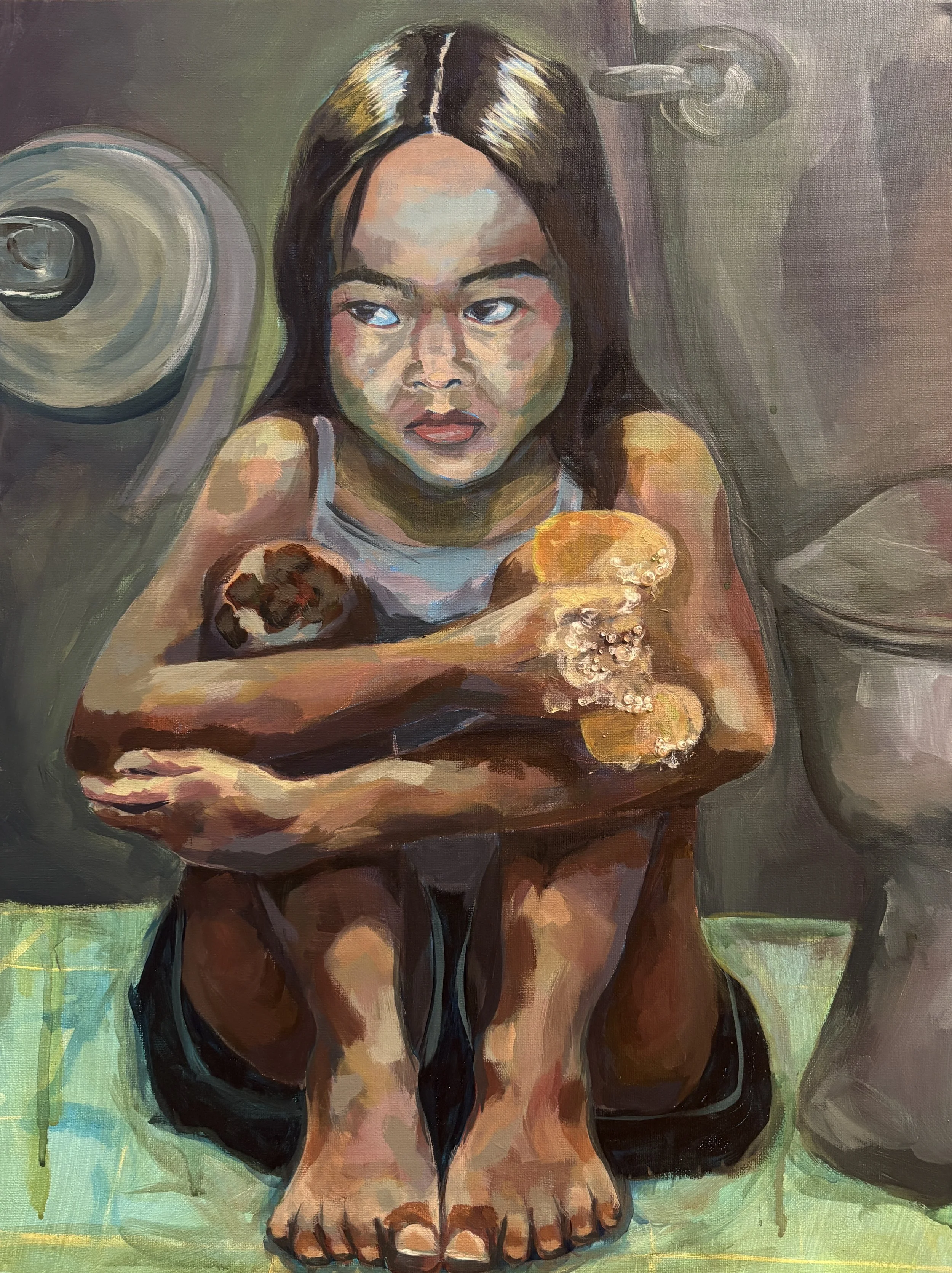
Ellie Kang, Dirty Knees, Acrylic and Plastic beads on Canvas, Castilleja High School, Grade 11, Instructor: Helen Johansen
My piece, Dirty Knees, is a play on the racist playground chant “Chinese, Japanese, Dirty Knees,” used to mock Asian American children. I sought to visualize how an early experience with racism can cement psychological damage to one’s identity, leading one to erase parts of that identity to be “clean,” or, in other words, American. The muddled washes and thick paint strokes used to render the painting convey an internal framework of a gross distortion, an unstable ideal Americanness that a child might create, which pollutes innate cultural pride with shame.
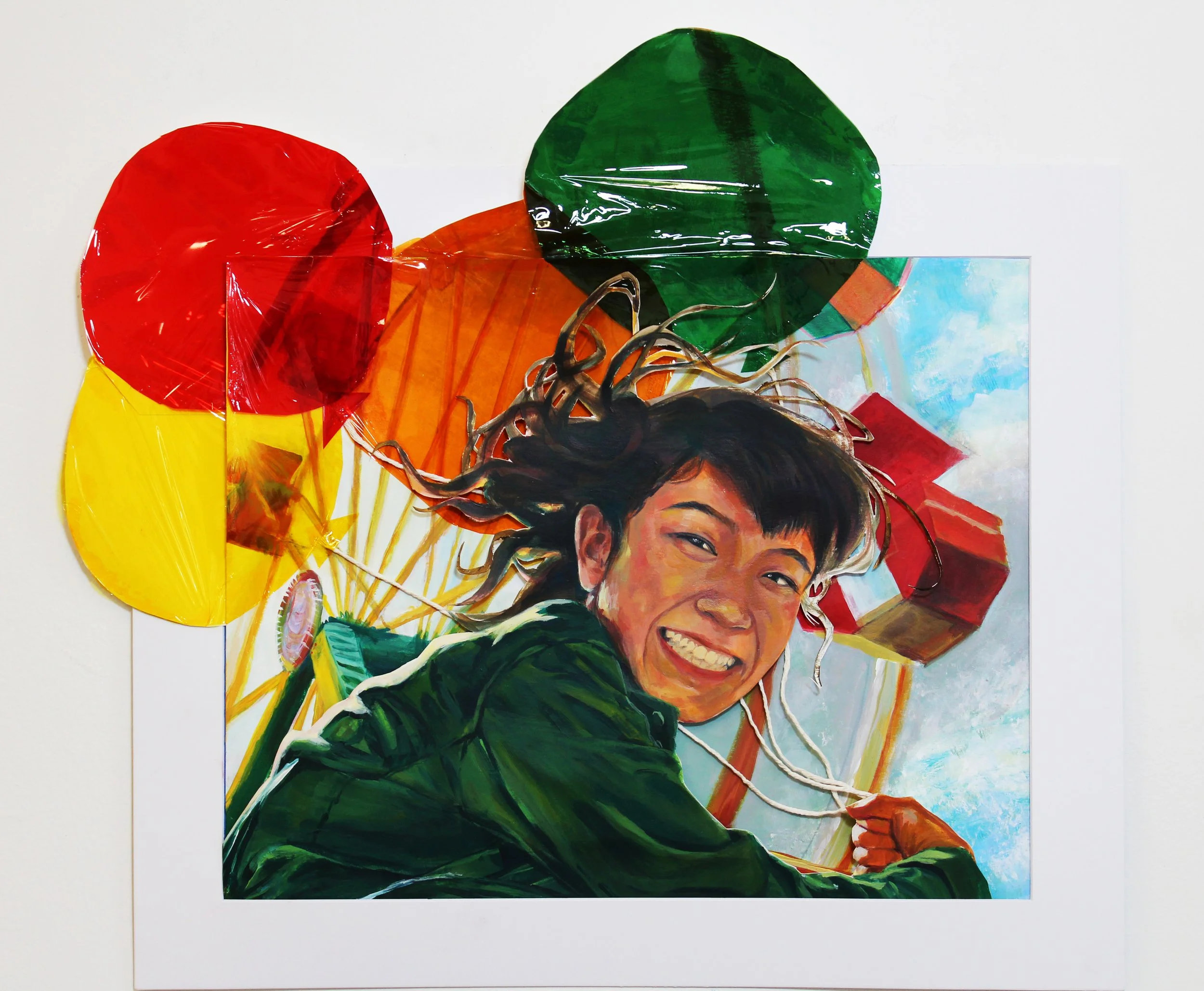
Ivy Lee, Event Horizon, Acrylic paint, colored cellophane sheets, twine, mixed media paper, Palo Alto High School, Grade 12, Instructor: Tracey Atkinson
Through nostalgic memory, this piece reflects the patterns of joy and wonder formed in childhood. These memories exist as a before, a foundation that continues to influence who I am. As time passes, I stand between holding onto that innocence and welcoming change, recognizing that true happiness is transformative. The cellophane balloons echo delicate happiness and fleeting possibilities, symbolizing choice. Beyond nostalgia, Event Horizon asks whether we will grasp what lifts us by taking risks to pursue happiness, or let it drift away.
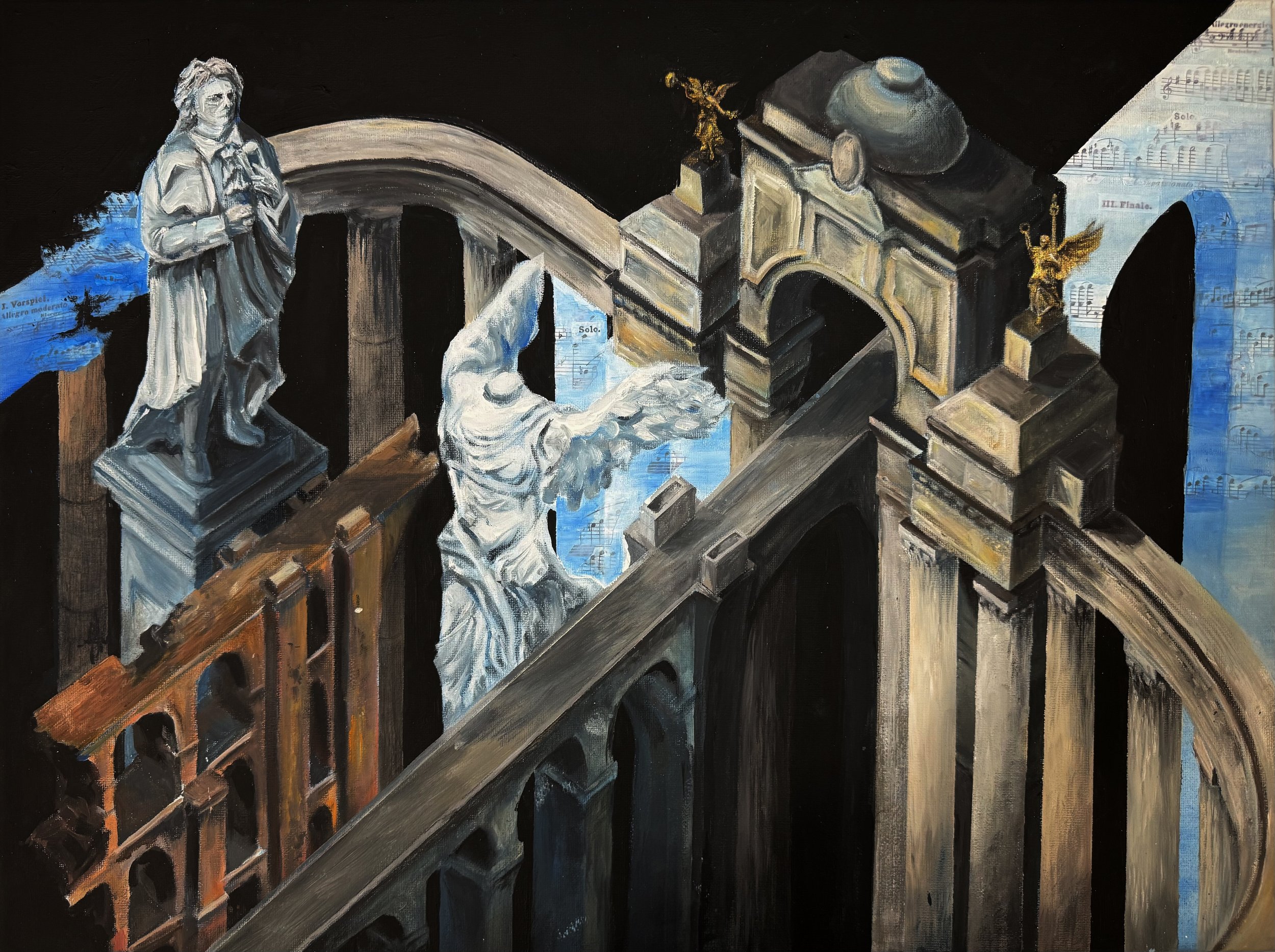
Yishan Lin, Prelude, Adagio, Finale, Acrylic on canvas, Monta Vista High School, Grade 10, Instructor: Eva Olsen
Classical music tells a story. Through my violin, I’ve discovered German composer Max Bruch, whose works are rooted in the emotional depth of German Romanticism. Inspired by classical German statues, I interpret his Violin Concerto as a three-movement tale of Before, Between, and Beyond. The prelude depicts silent struggle, reflecting internalized tension in militaristic Germany of the late 1800s, embodied by a contemplative figure. Between, the music unfolds and rises, as he confronts reality, reaching upward with sentiment like a fallen angel. In the finale, golden forms emerge, as music guides the violinist beyond struggle towards hope and monumental relief.
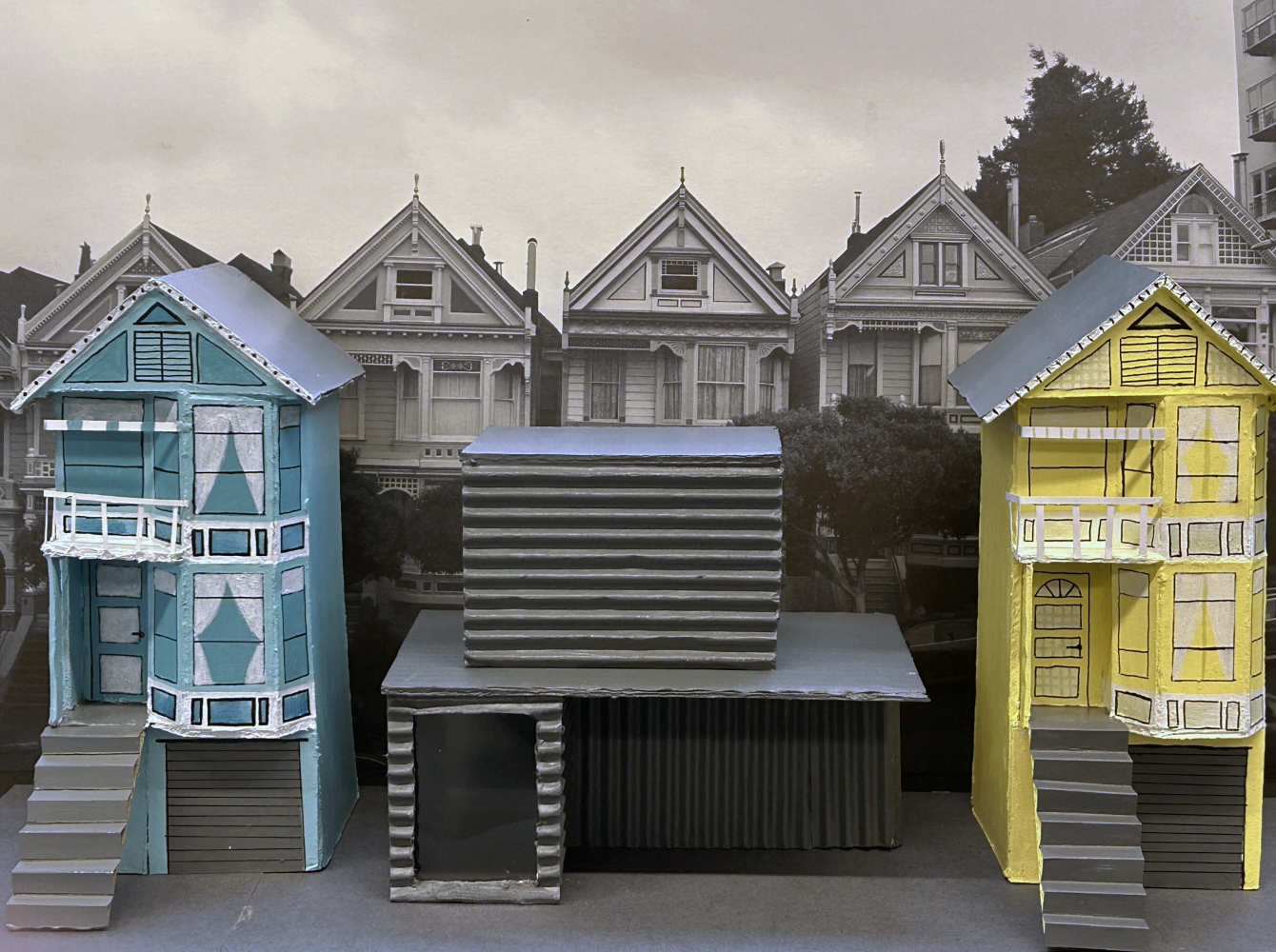
Naomi Ohye, New Development, Cardboard, acrylic paint, paper, ink pen, plastic sheet, Los Altos High School, Grade 11, Instructor: Christine An
The ornate beauty of historical homes is slowly disappearing, replaced by harsh, modern structures. This piece reflects that tension between history and what futures we create. The two Victorian houses hold stories and memories of the past, while the shipping container home in the center feels cold, abrupt, and out of place. Together, all three capture a moment of change, standing between tradition and modernity, inviting reflection on what we choose to hold onto, what we let go of, and how the world around us shapes the way we see beauty.
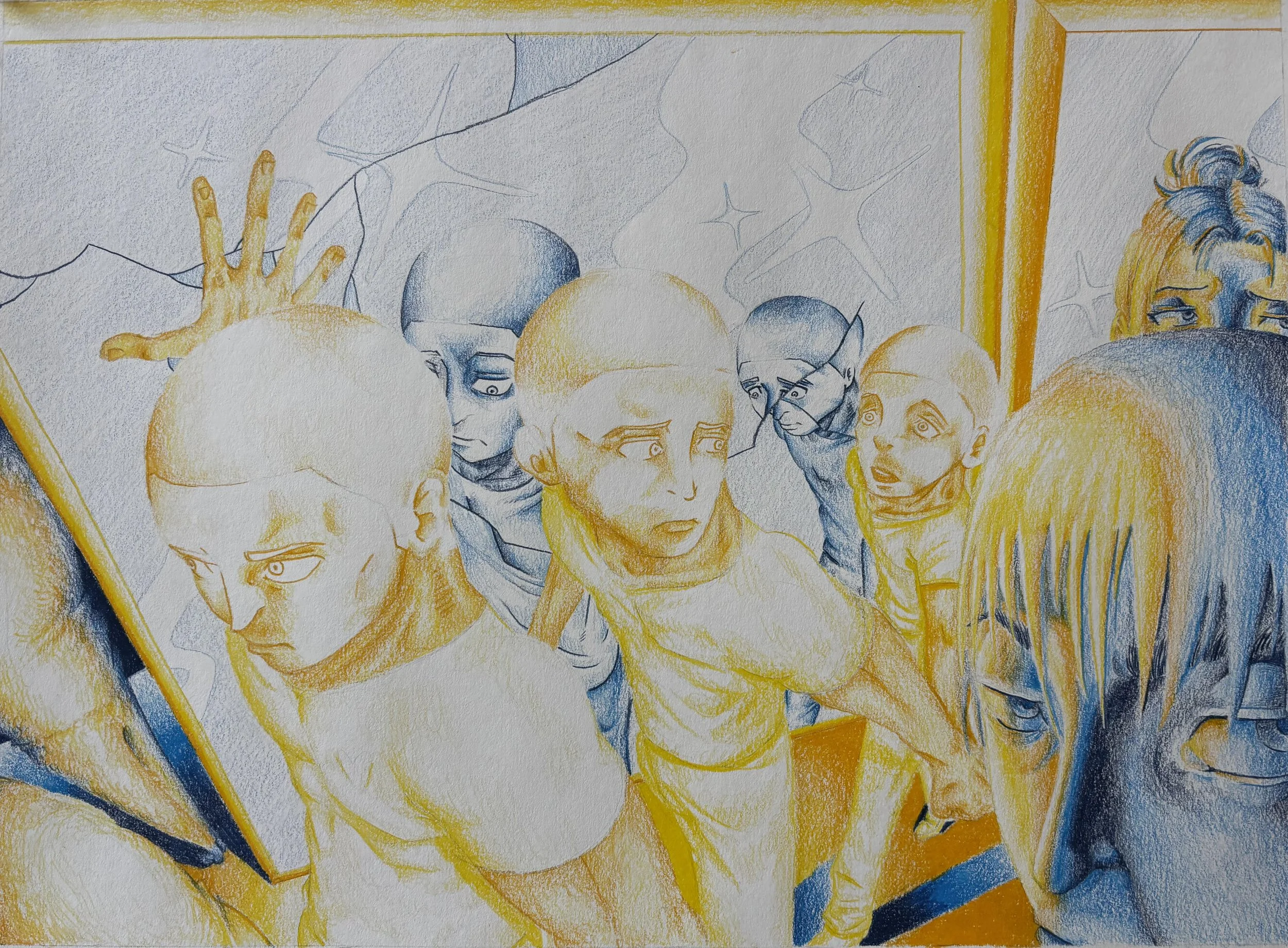
Paolo Pena, Brightest Shine In Your Eyes, Graphite, Mountain View High School, Grade 10, Instructor: Meghan Engle
My decisions for the future are created from the lessons of the past and what I’ve experienced around me. My future shall be decided with what parts of myself I believed worked with me the best and what parts of myself I decide to leave behind that will get me towards the overall person I want to be. That's exactly what I'm expressing in my artwork when I take the hand of my child self. Ultimately creating a different future, cutting off the choices that will not get me to who I want to be.
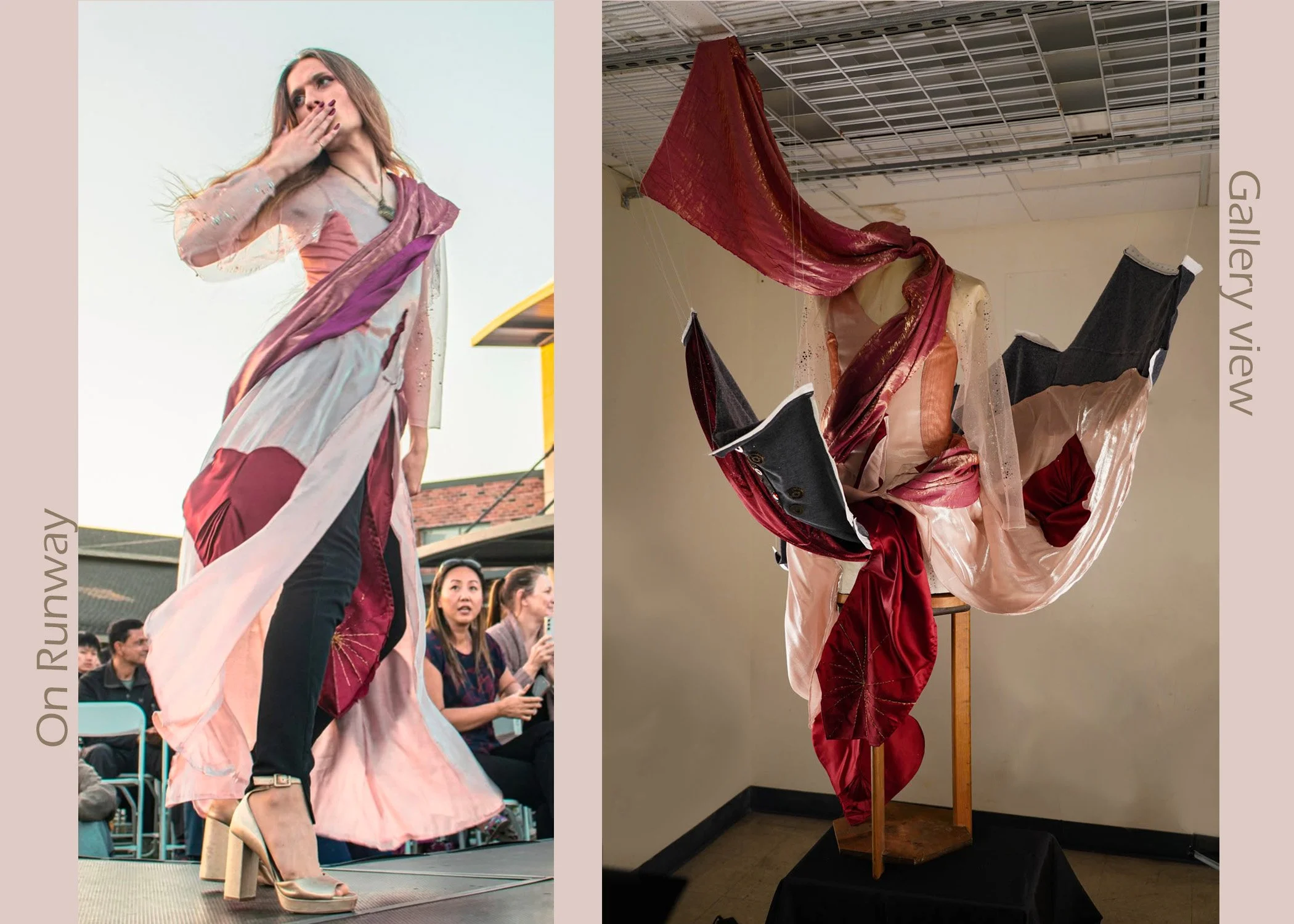
Seir Szewczyk, Nascence, Fabrics, Lynbrook High School, Grade 12, Instructor: Matthew Reynolds
In this transformation dress, I examined the interplay between Aphrodite and her husband Hephaestus to explore how echoes of historical gender roles shape modern people. In the past, queer people have redacted aspects of themselves to be safe in society. Now, even openly nonbinary people like myself will present more masculine to hide vulnerabilities. It is time to shed that everyday cotton shell, revealing luxuriant satin, mesh strewn with pearls. While patriarchal systems can drive us to hide vulnerability or more feminine attributes, displaying oneself wholly will allow the world to move beyond past limitations, into the shining future.
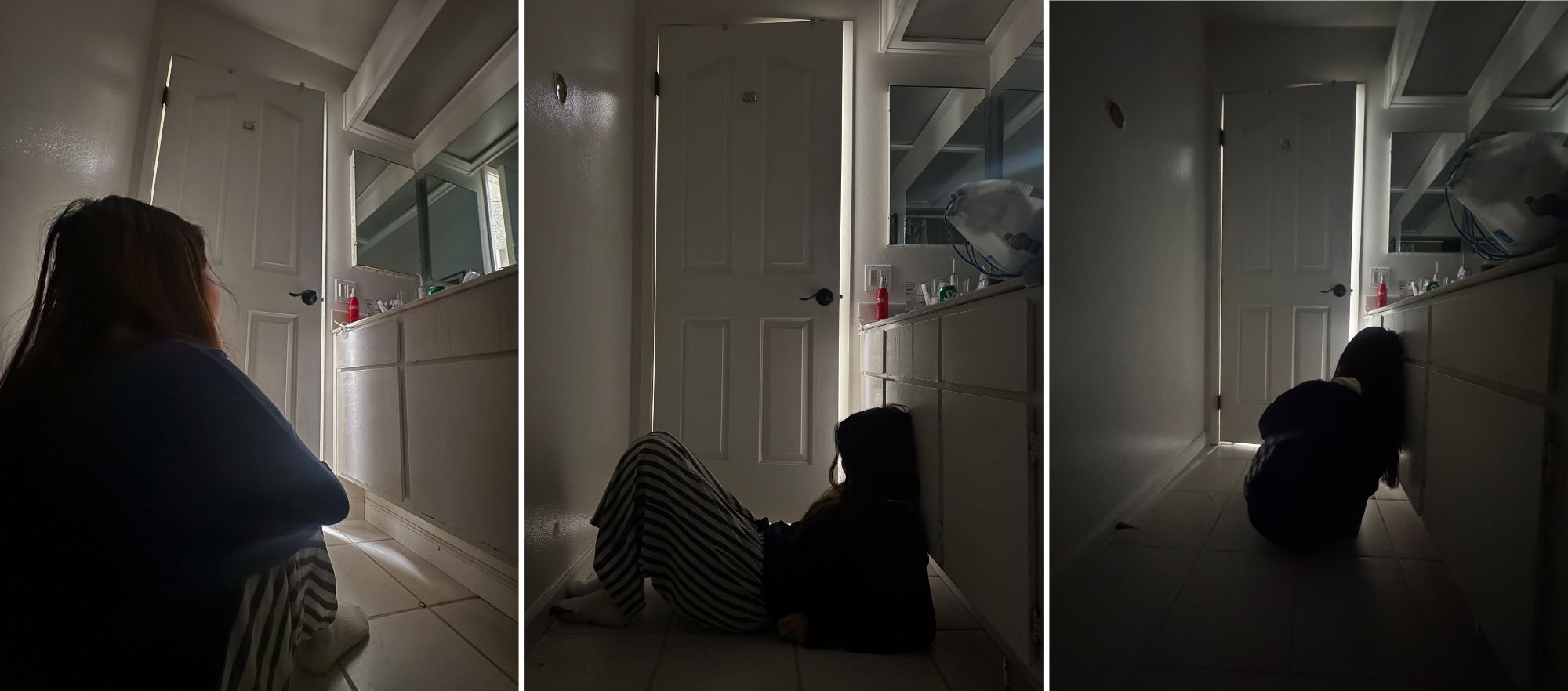
Aya Takano, The Dark Bathroom, Digital photography, Leland High School, Grade 11, Instructor: Stacy Rapoport
As a childhood punishment, I was forced to sit alone in “the dark bathroom” for hours. In that space, I felt fear and anger toward my parents. Looking back, I see how these moments began to fundamentally change who and how I am. Slowly retreating away from the happy child I had been by cutting off parts of my behavior to meet my parents’ expectations and avoid punishment. Now I’m at a crossroads: do I stay this way or push myself to be less reserved and quiet and try to find the child that used to be so carefree.
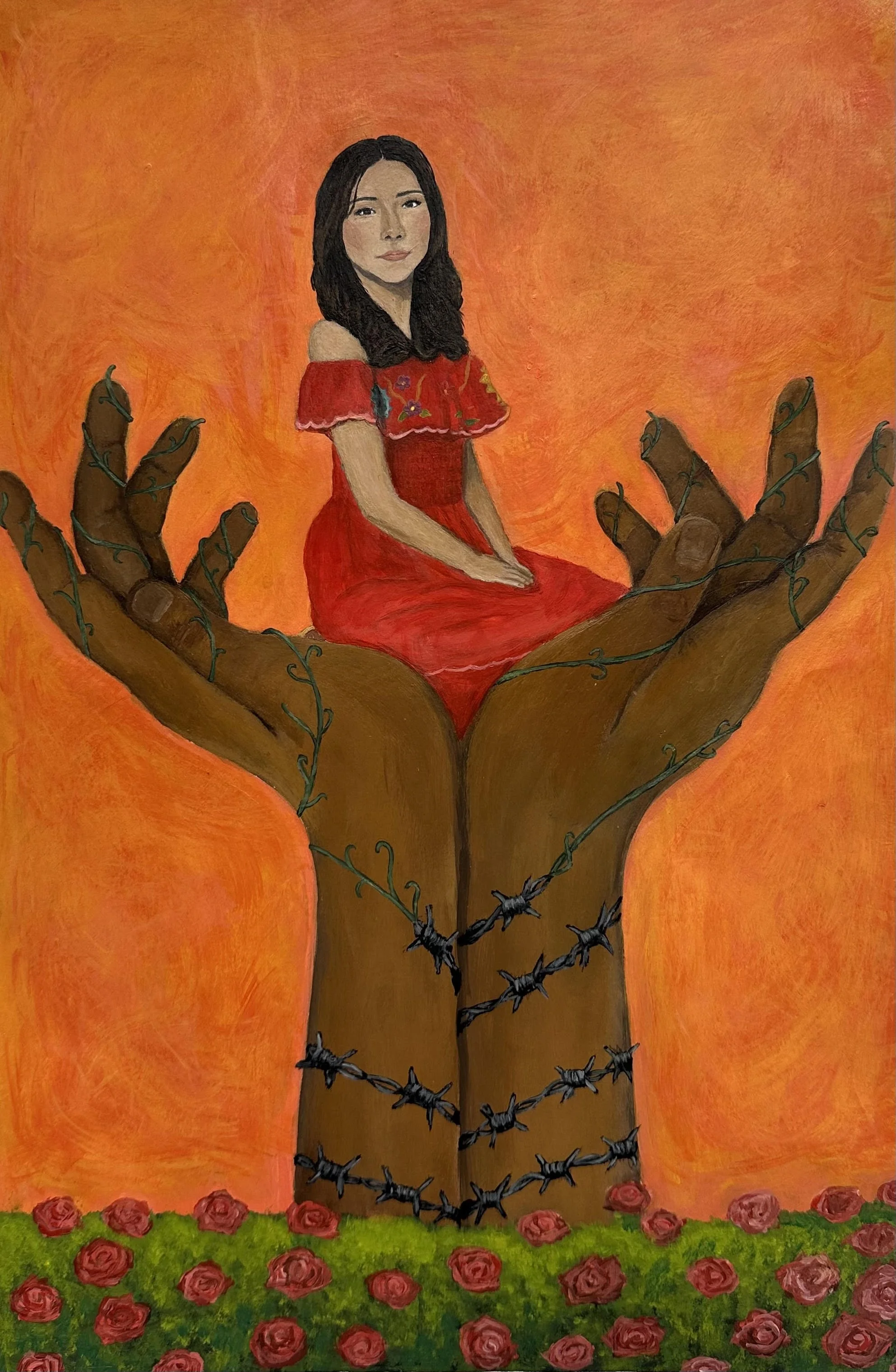
Diana Ventura, El Desprecio de la Mujer Hispana, Acrylic on paper, My school is not listed here, Grade 11, Instructor: Butana Molefe
My piece is meant to represent the invisible strength of Hispanic women and how their power is often underpreciated in the Hispanic community despite them being a crucial part to every family. The hands symbolize the support offered by these women to their children and family despite all the expectations and struggles Hispanic women have been facing for generations. The girl being held up is supposed to represent me and the passing of these expectations in my current life. The barbed wire transforming into vines represents my hope to change this cycle and make these powerful women seen and valued.
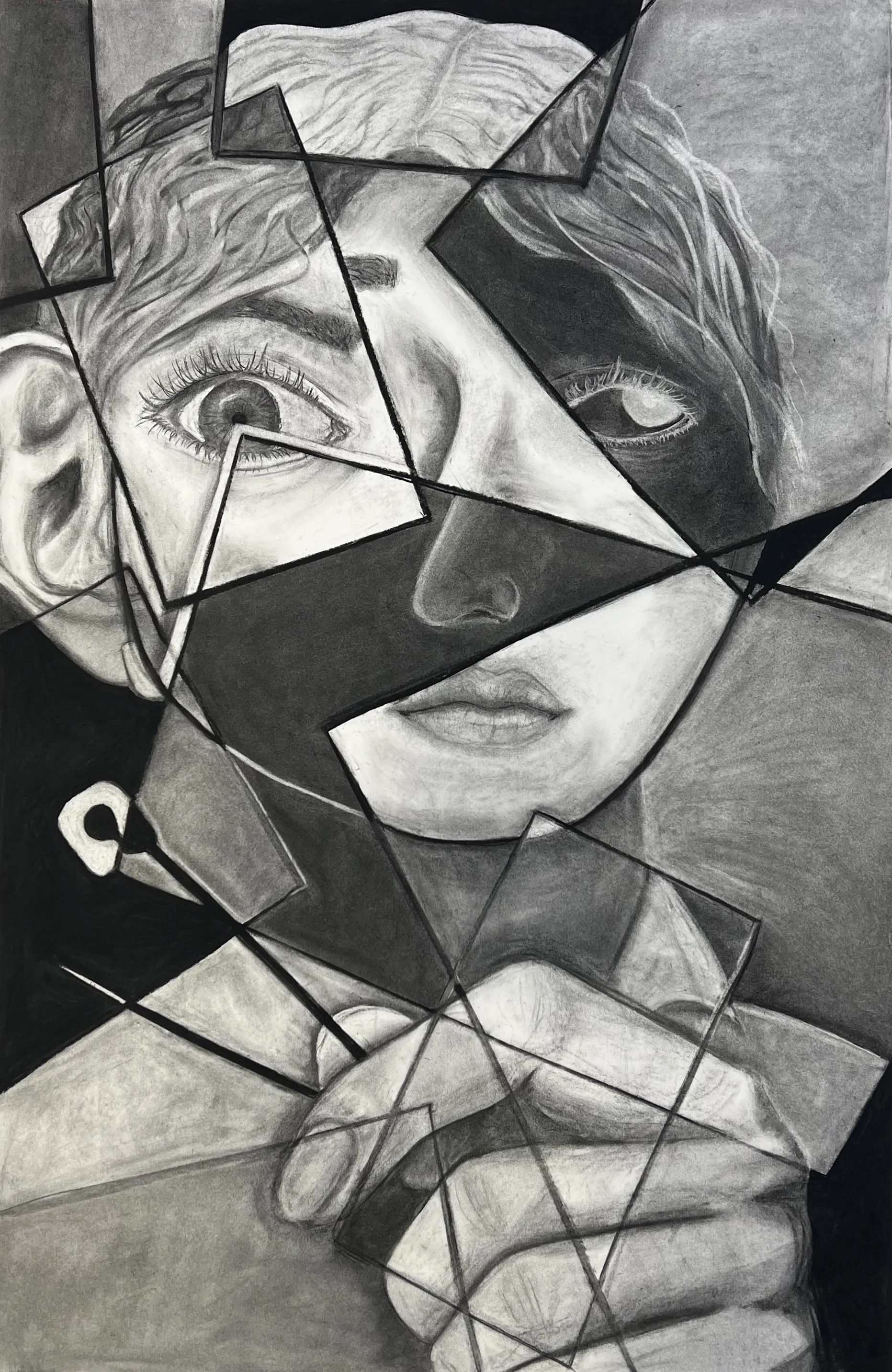
Trisha Wadhwa, Mine (Hers?), Charcoal and black & white conté on paper, Notre Dame High School, Grade 11, Instructor: Laura McFaden
Recently, I learned the woman I knew as my grandmother is not biologically related to me, and that my real grandmother died by suicide when he was young. Although I never met her, her loss has shaped my family, and therefore, me. This fragmented self-portrait merges my facial features with the outline of her face, reflecting my curiosity about what I inherited from her. Safety pins represent a promise to persevere; the open pin in my piece indicates this promise was broken for her, and how I am now trying to understand how her loss shows up in my family.
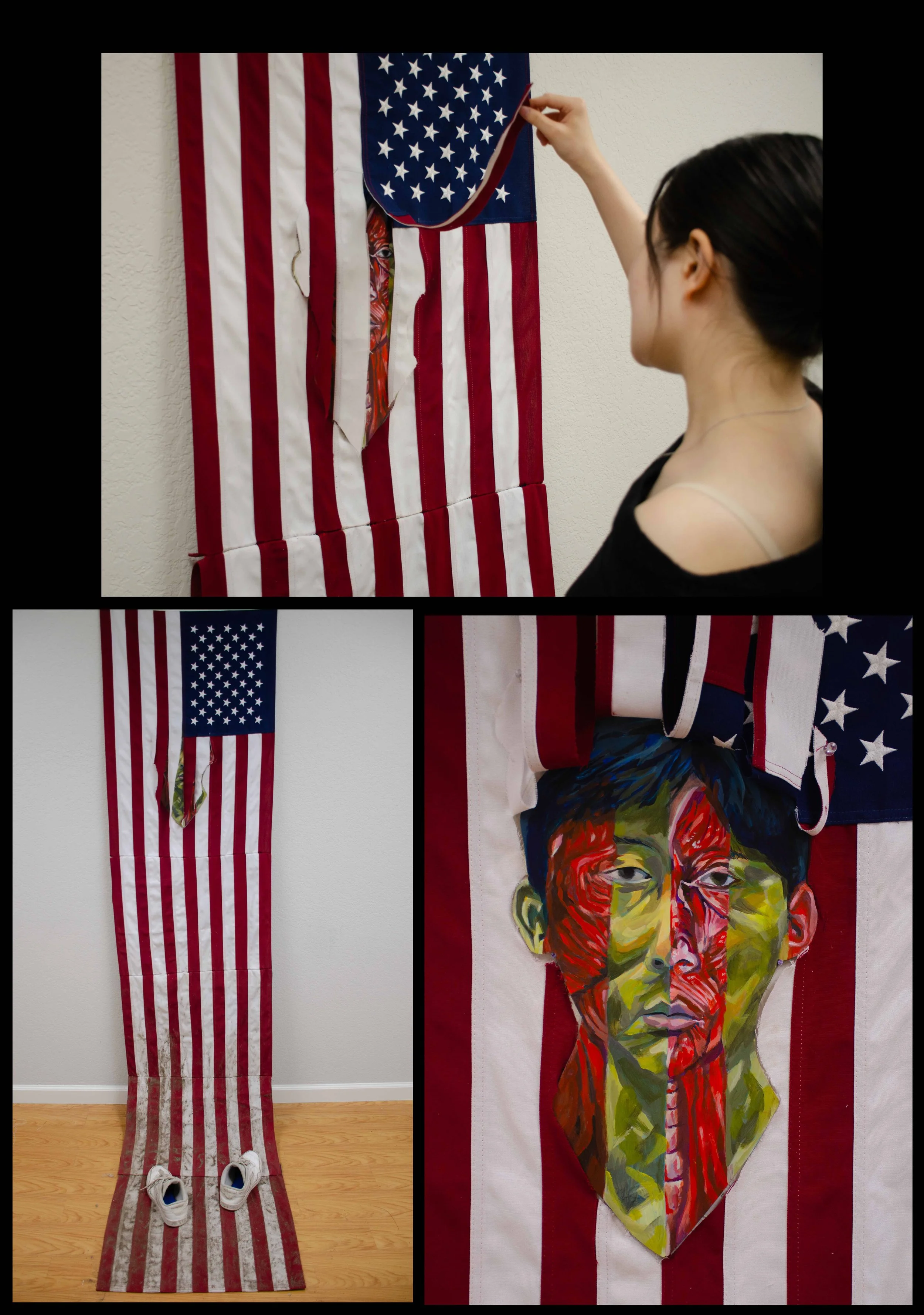
Charlie Wang, Don't Tread on Me, Acrylic on Wood Panel, Sewing thread, American Flags, Shoes, Dirt, Harker Upper School, Grade 12, Instructor: Pilar Aguero-Esparza
What's the cost of being American? Both an installation and performance piece, "Don't Tread on Me" viscerally captures my experience of homogenizing as much as I can as an Asian American to the United States and the painful difficulty of acknowledging my atrophying relationship to my own heritage. The painting is revealed piecemeal by lifting stripes of the US flag, revealing a corresponding stripe of my face. I invite viewers to step on the flag, creasing and dirtying it in the process, an exploration of the impact that society, comprised of individual people and actions, has had upon my identity.
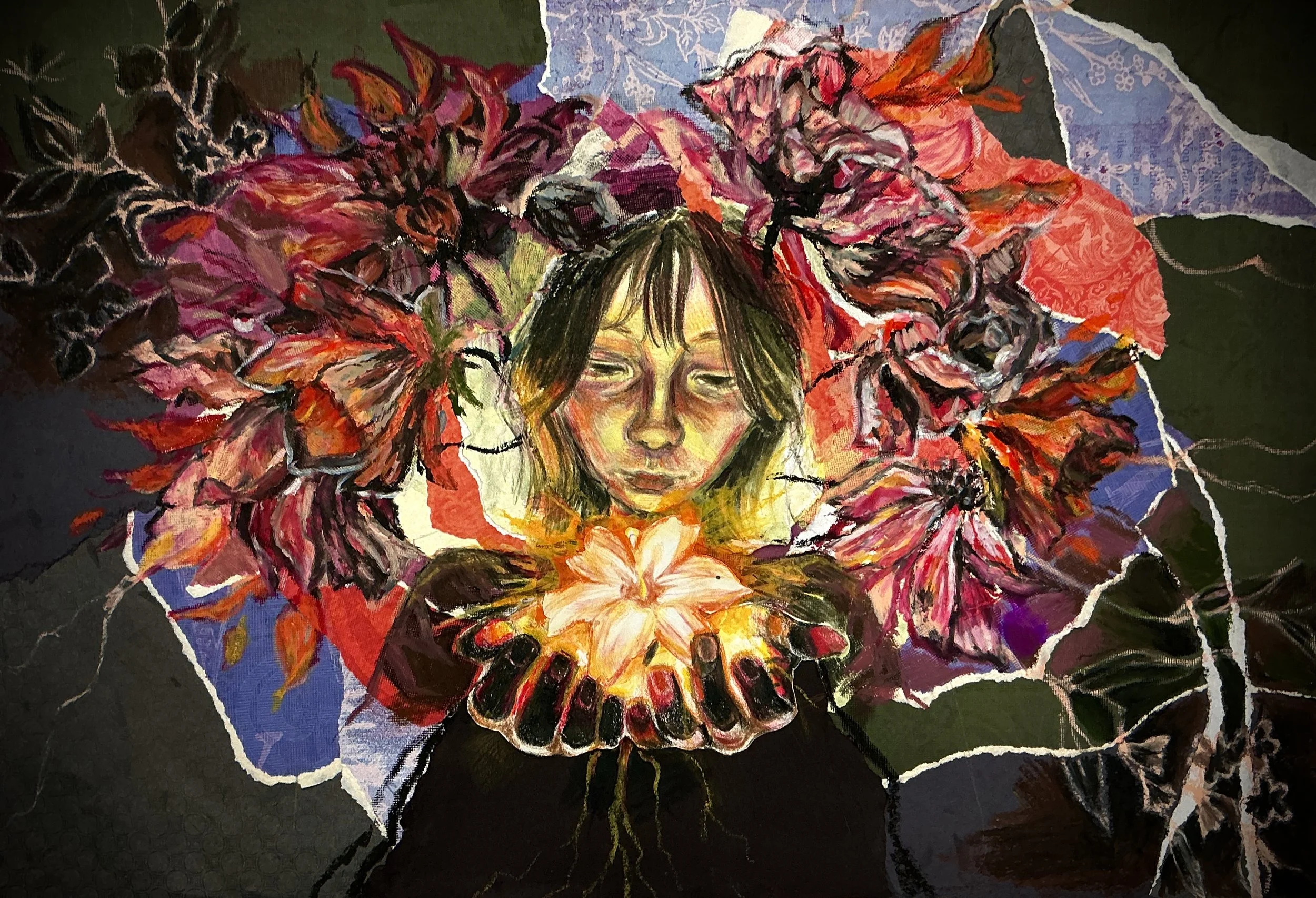
Emma Wang, In Bloom, Oil pastel, colored pencils, cardstock, scrapbook paper, acrylic paint, Leland High School, Grade 11, Instructor: Stacy Rapoport
As I transition through phases in my life, there are many versions of myself that I've sacrificed and they surround me as wilted flowers. At the threshold of the past and future, I pause to honor the experiences that have made me who I am today, then turn my gaze to the glowing flower in my hands–the version of myself I want to become. Because, ultimately, what compels us to break our patterns is the will to become the best version of ourselves, to move forward into the future through a past that shapes us, instead of restraining us.
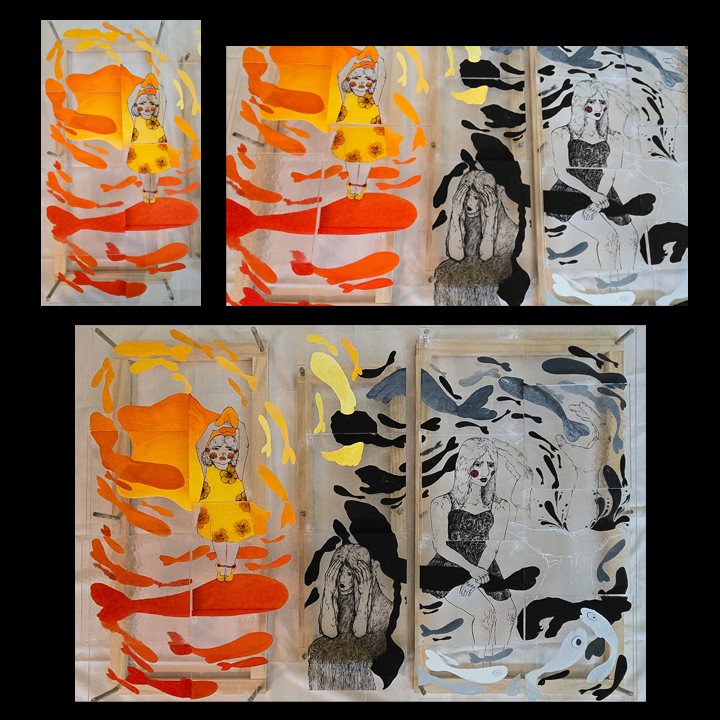
Sophie Wang, In The Space Between Girlhood, Acrylic panels, Poster paint, Wood, Metal and Acrylic posts, Lynbrook High School, Grade 11, Instructor: Alex Lee
This piece illustrates how there are certain societal standards/expectations for young girls. The swift change from bright colors to dull grayscale represents how carefree innocence is taken, resulting in an exhausted girl in the middle of this process. The middle figure hunched and surrounded in darkness depicts an overwhelmed/lost version as she is changed by society. The last girl sits rigidly tall, uncomfortable and uptight, showing how she was forcibly changed. I used staggered acrylic boards to create depth and ironic transparency and flat paint to add a graphic feel. My work represents my own experiences and struggles in life.
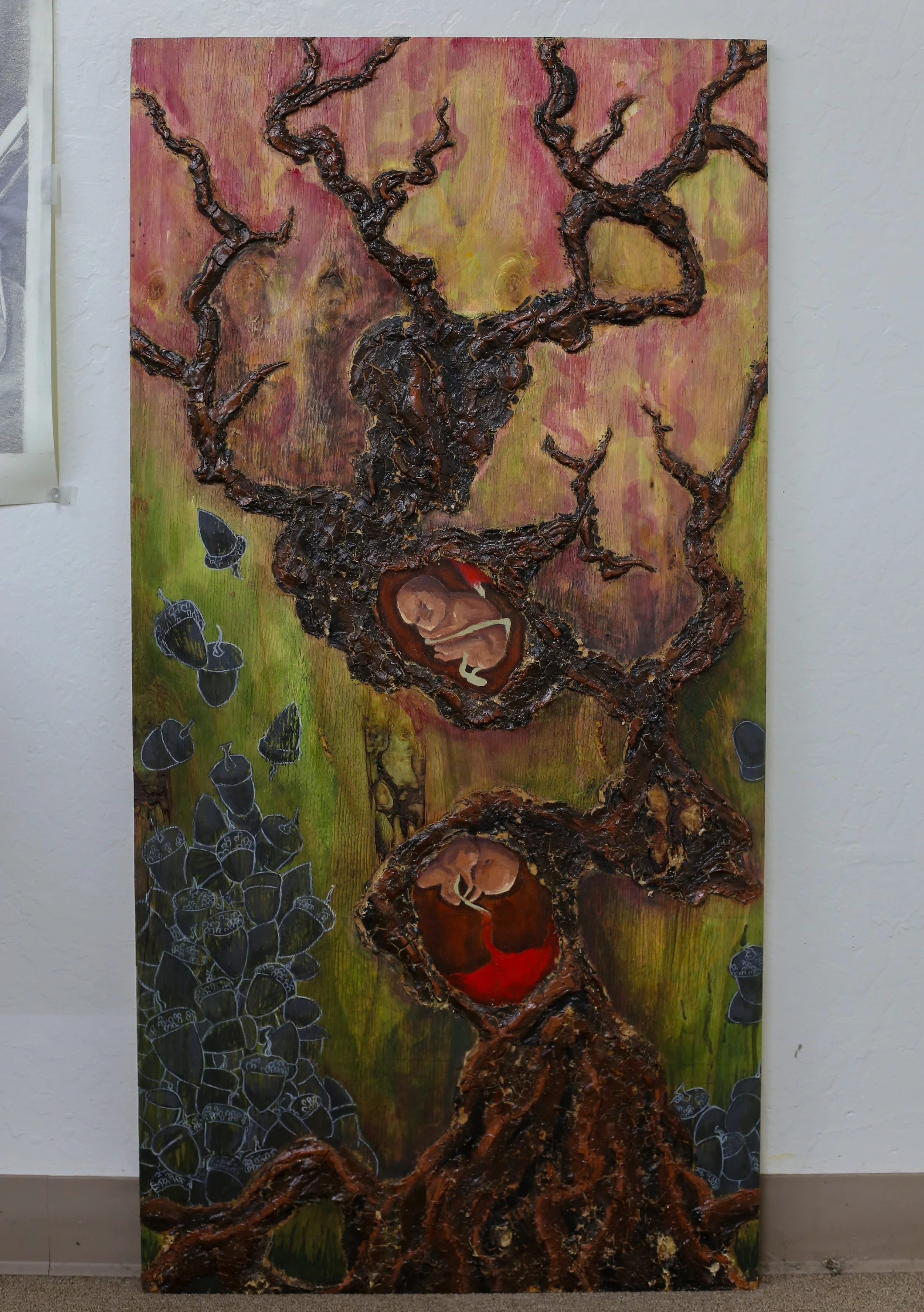
Everett Wu, To Cut Down A Pedigree (The Fall Of Human Trees), Acorn starch, acrylic, water color, and charcoal on plywood board, Homestead High School, Grade 11, Instructor: Alex Lee
This piece was created through cycles of laying down wet acorn starch on a stained wood board, letting it dry and crumble, and reshaping what remained until it took form. I painted over what remained. It mirrored nature and humanity, humans where nurtured by nature's cycles, shaping us, our habits, the need for companions. Humans, in turn cooperated to break and shape nature to our own design. Yet, in the quest for progress, the first companion, nature was stripped bare, it gave and we took, seas and trees boil and burn until only fumes remain. Another cycle to break.
Yiling Wu, Anima, Interactive web art, video, p5.js JavaScript code, acrylic, linocut printmaking, marker, and colored pencil, BASIS Independent Silicon Valley, Grade 12, Instructor: Baoping Chen
“Anima” reflects the layered nature of human identity through shifting portraits that reveal the many faces a person carries, beyond their surface-level disposition. Artworks of varying mediums and durations, from 2 hours to several weeks, represent the diversity of creation and expression composing one’s character. Each portrait holds past experiences, learned behaviors, and environmental influences subconsciously shaping our identities. Confronting these layers allows introspection into our underlying truths and conflicts, stripping away personas created to appease superficial audiences. Understanding our inner complexity allows us to move forward with clarity and hope, knowing that we are simultaneously unique and not alone.
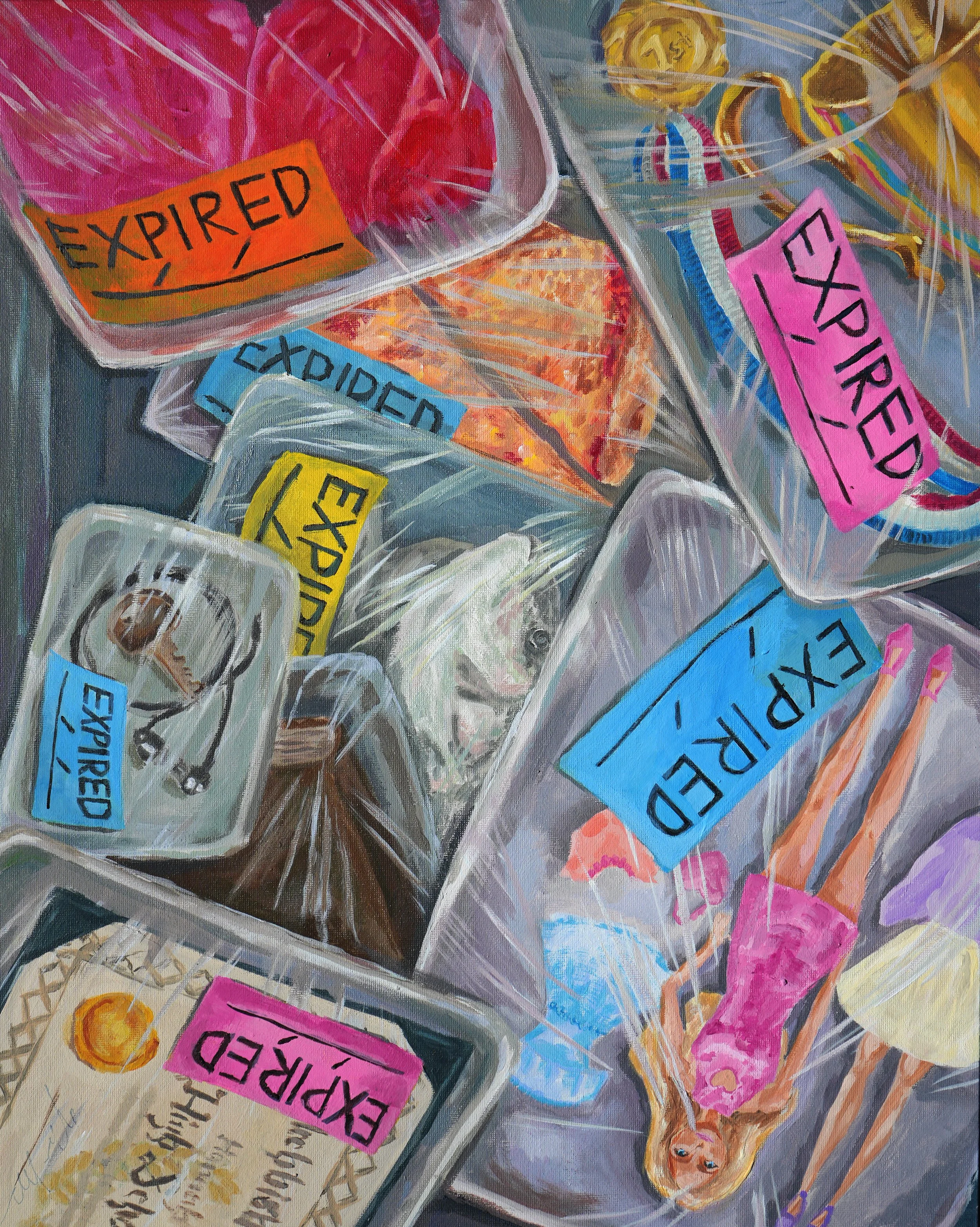
Hannah Ying, After the Want, Acrylic on canvas, Archbishop Mitty, Grade 11, Instructor: Ruimin Ma
For the theme “Before,” my acrylic painting explores the frameworks of modern validation. By packaging trophies, diplomas, and electronics alongside supermarket meat, I wanted to parallel the personal pursuit of success with society’s rampant consumerism. Shaped by patterns of comparison intensified by the digital age, we constantly crave the newest, shiniest accolades. “After the Want” depicts how their novelty inevitably expires, and gnawing insecurity returns. I painted bright ‘EXPIRED’ labels against a grayed background to show success as a perishable good, hoping to invite conversation about the social forces driving us to seek validation from outside instead of within ourselves.
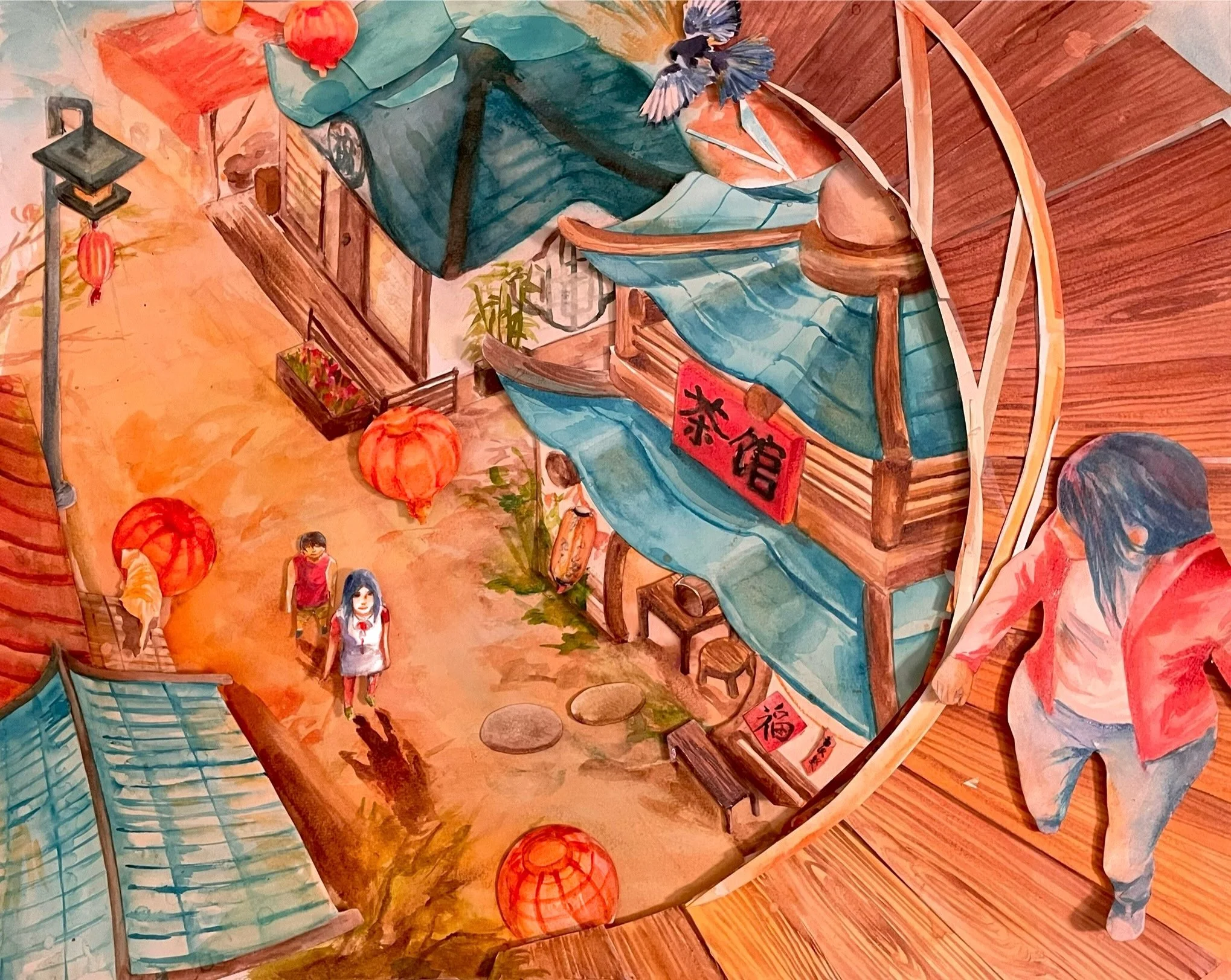
Peifeng Zhang, Steps Into Yesterday, Watercolor, foam, collage on paper, Palo Alto High School, Grade 11, Instructor: Tracey Atkinson
Sometimes, I get too caught up in rushing toward my future, forgetting to step back and reflect. In my art, I explore the intersection of different stages of life. As my present self descends the time-worn staircase, she uncovers a nostalgic scene: Chinese new year in the streets of her childhood town. The familiar red, turquoise, and brown hues reflect the warmth of lantern-lit streets, faded storefronts, and walls. The emotions embedded in colors worn down by time, but vivid in memory. She sees herself and her brother, who gaze back up at her, reminding her to cherish their memories.
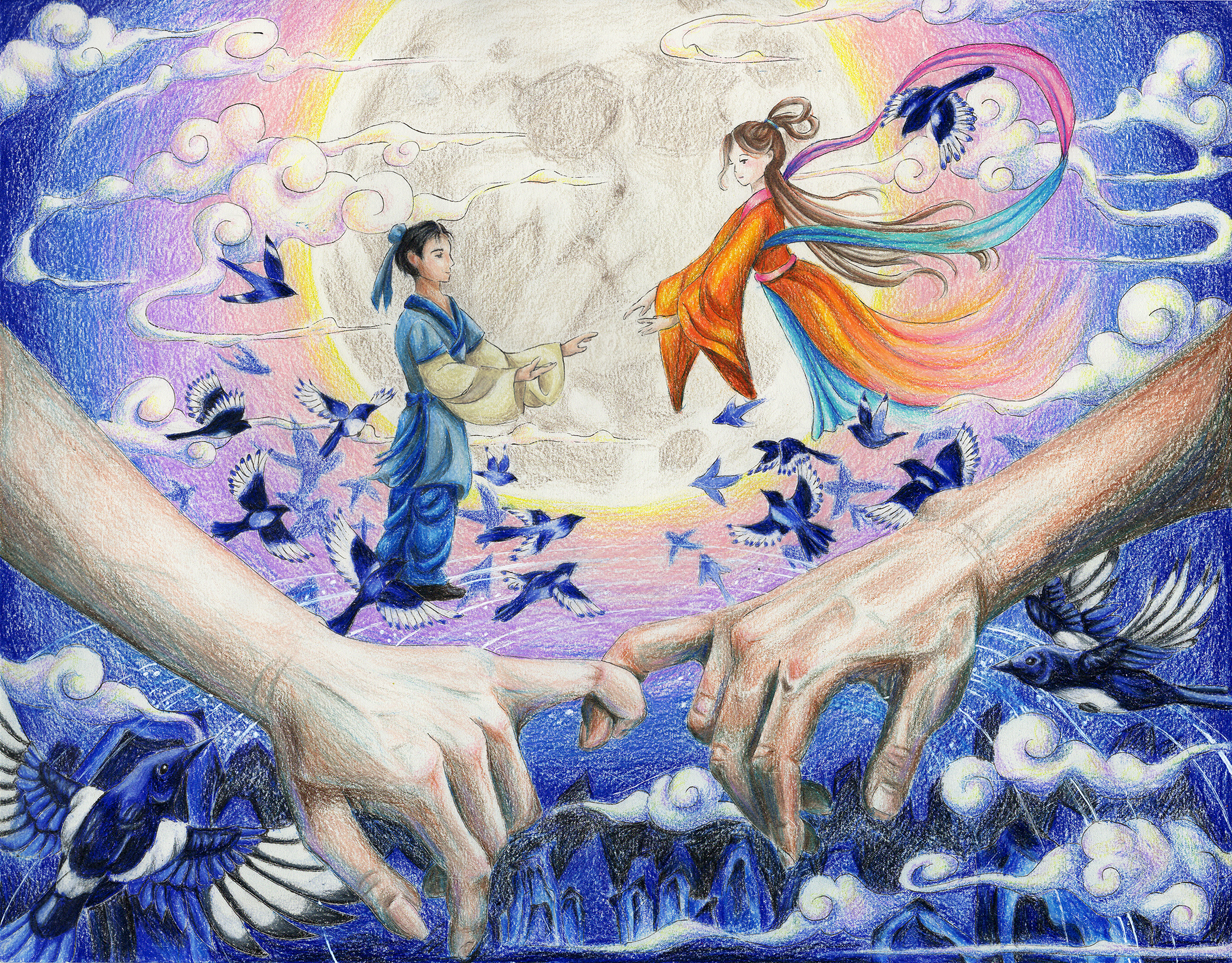
Isabel Zheng, Across the River of Stars, Ink and color pencil on paper, The King's Academy, Grade 10, Instructor: Eva Olsen
Inspired by a Chinese legend from my childhood, “The Cowherd and the Weaver Girl,” this piece explores how inherited stories shape our perceptions of love today. The myth’s celestial setting–star-crossed lovers divided by the Milky Way–reflects cultural beliefs about devotion, distance, and duty passed through generations. The magpie bridge represents an age-old force that sustains connection, while the linked hands in the foreground bring that same perseverance into modern relationships–whether romantic, familial, or platonic. By merging tradition with contemporary symbolism, I ask what our shared myths reveal about society, and how they continue to shape our hopes, commitments, and resilience.
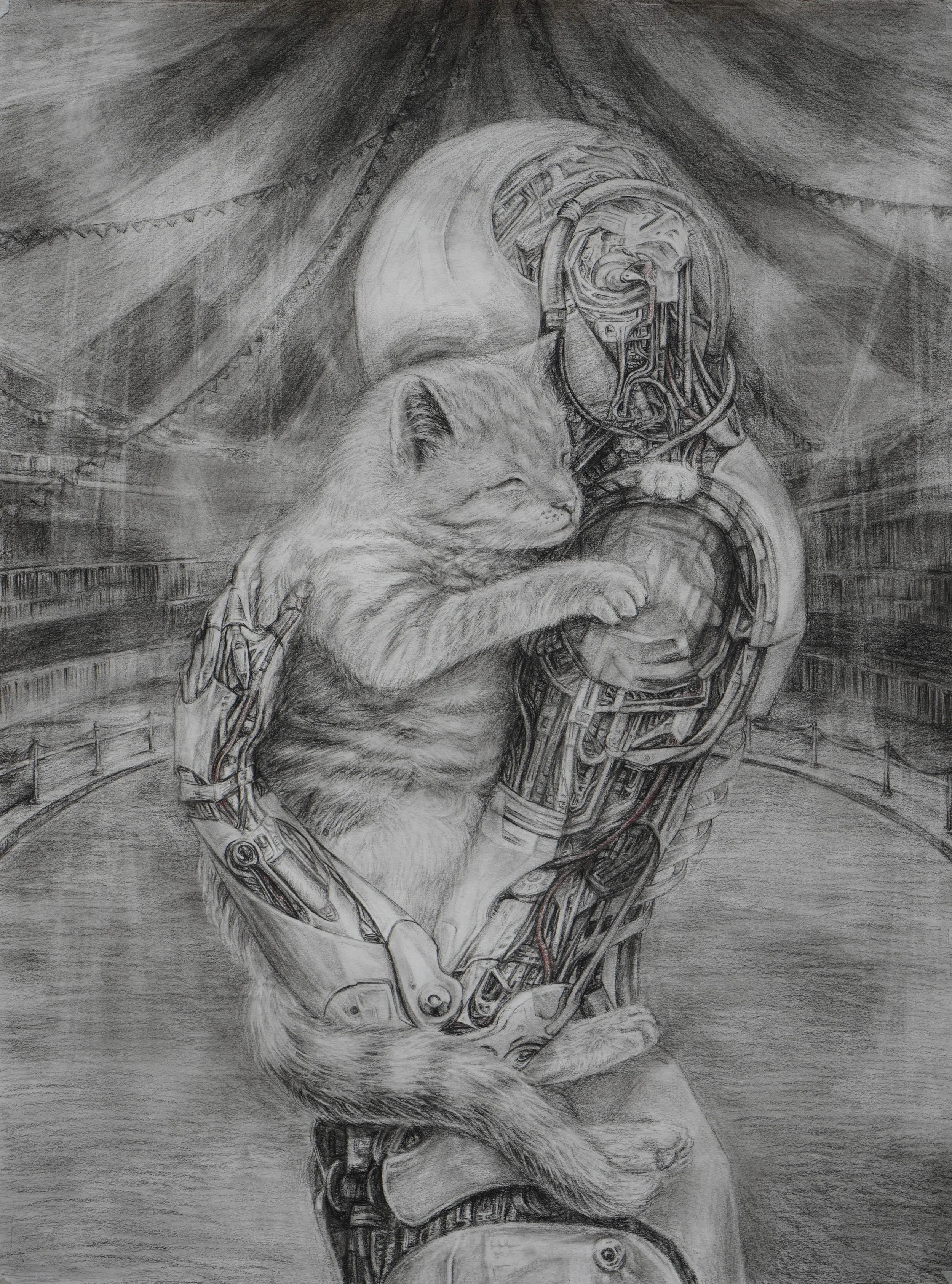
Kiara Zhou, Untrained, Charcoal and red colored pencil on paper, Los Gatos High School, Grade 12, Instructor: Ruimin Ma
When I asked ChatGPT about its identity, it replied that it was “a machine model trained to respond in a way that feels natural.” The word 'trained' left a strong impression on me and inspired this drawing. Before AI, empathy was a human experience, with the circus background emphasizing how human-centered emotions were. Between, this piece blurs the line between human and artificial emotion, shifting attention away from humans and raising the question of whether emotions can be trained. Beyond, this piece offers a glimpse into the future, featuring a robot experiencing what seems to be a genuine emotion.




This year, we received 600+ individual submissions, more high-quality pieces than our gallery can hold, making selecting the final pieces for the exhibition a difficult process. Our selection committee saw high merit in each of these honorable mentions and wanted to show appreciation for the thoughtfulness and skill of each artwork. Although these students aren’t exhibiting artists in this year’s exhibition, we wanted to feature their artwork and statements on our blog to honor their effort, talent, and perspective.